Introduction
The money is real, and the clock is running out. On May 20, 2026, the EPA announced $2.9 billion for states to replace lead service lines — the last annual round of the $3 billion-per-year supplemental funding the Infrastructure Investment and Jobs Act (IIJA) set aside for this work. Fiscal year 2026 is the final year that money exists. Behind it sits the 2024 Lead and Copper Rule Improvements (LCRI), which gives water systems ten years to replace every lead service line and a November 1, 2027 deadline to finish their baseline inventories. If you supply pipe into North America, this is the demand story you need to read before you plan next year’s stocking levels.

The 2026 Funding Picture: What’s Ending and What’s Not
IIJA earmarked $15 billion total for lead service line replacement, paid out in five annual rounds of roughly $3 billion each through the Drinking Water State Revolving Fund (DWSRF). FY 2026 closes that chapter. The $2.9 billion announced in May is being distributed state-by-state, and utilities draw it down as below-market loans with principal forgiveness — grants in everything but name for small and rural systems.
Two details from the 2026 round tell you how this program actually runs. First, the EPA is redistributing $18 million in previously announced DWSRF money that states failed to use. Second, the FY 2025 round already had to reallocate $1.1 billion in unspent funds from earlier years (per WaterVerge, Mar 2026) — a sign that slow state bureaucracies, not a shortage of pipe, are the real bottleneck. The EPA also changed its allocation formula to tie funding to actual inventory data rather than population estimates. Translation: states that did their homework get the money.
| Round | Amount | Status |
|---|---|---|
| FY 2022–FY 2025 | ~$3B/year via DWSRF | Spent or reallocated; FY25 reallocated $1.1B unspent |
| FY 2026 (final) | $2.9B (announced May 20, 2026) | Being distributed now — final IIJA supplemental round |
| FY 2027 onward | No IIJA supplemental | LCRI mandate continues; funding uncertain |
What happens after September 30, 2026, matters more than what’s in this year’s envelope. The LCRI mandate doesn’t expire with the funding — water systems still must replace lead lines within the ten-year window. But Congress has already signaled belt-tightening: a January 2026 spending package proposed cutting $125 million in lead service line replacement funds (per Food & Water Watch). Expect utilities to front-load projects while soft money lasts.
The Rule Driving the Work: LCRI’s Hard Deadlines
The EPA finalized the Lead and Copper Rule Improvements on October 8, 2024. The headline numbers: lead action level cut from 15 µg/L to 10 µg/L, and a requirement to identify and replace lead service lines within 10 years. What most suppliers miss is the intermediate deadline — every water system must complete a baseline inventory of service line materials by November 1, 2027 (NACo, Aug 2026). That inventory milestone is where procurement pipelines start moving: you can’t replace what you haven’t mapped.
On August 21, 2026, the EPA released new compliance guidance for the LCRI (NACo, Aug 27, 2026), giving water systems direction on how to assess, identify, and access service lines. Guidance releases like this are the tell — enforcement is coming, and the utilities that waited are now scrambling. For pipe suppliers, the procurement pattern is predictable: inventory → design → bid → order. The bid waves hit distributors 12–24 months after each inventory deadline.

Where the Pipe Demand Actually Shows Up
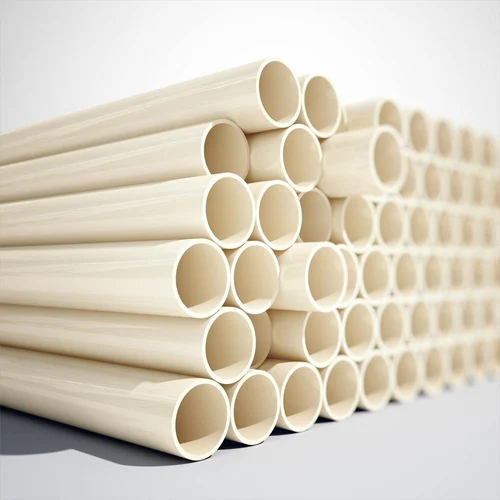
Here’s the part most trade coverage gets sloppy about. Lead service lines themselves are not replaced with PVC. The service line — the short run from the water main under the street to the meter — is almost always copper, CPVC, or PPR. That’s the piece the $15 billion funds. So if you sell PVC pressure pipe, the lead program money isn’t buying your product for the service line itself.
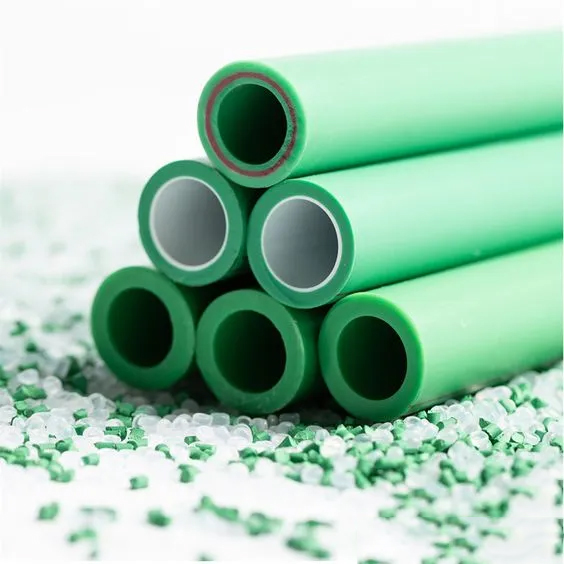
But follow the trench. When a utility digs up a street to swap a lead service line, it commonly replaces the adjacent aging cast-iron or galvanized main in the same open cut. That main work is where AWWA C900 PVC pressure pipe (and ductile iron) wins bids — PVC for the budget, corrosion-resistance, and ease-of-install story. The LCRI also has a nasty trigger clause: if service line work disturbs a galvanized line downstream of a lead connector, the whole assembly must be replaced. And when a home’s interior piping turns out to be galvanized or lead-soldered, the re-pipe work inside the building goes to CPVC (ASTM D2846) or PPR. That’s the CPVC demand vector: partial lead replacement forces full interior repipes, and CPVC is the flame-retardant, hot-water-capable workhorse of North American residential and light commercial repipes.
- Service lines: copper, CPVC, PPR — funded by the $15B program
- Distribution mains opened in the same trench: AWWA C900 PVC and ductile iron
- Interior repipes triggered by partial replacements: CPVC (ASTM D2846) and PPR
- Fittings and valves on every leg: solvent-weld PVC/CPVC fittings, transition fittings, meter valves

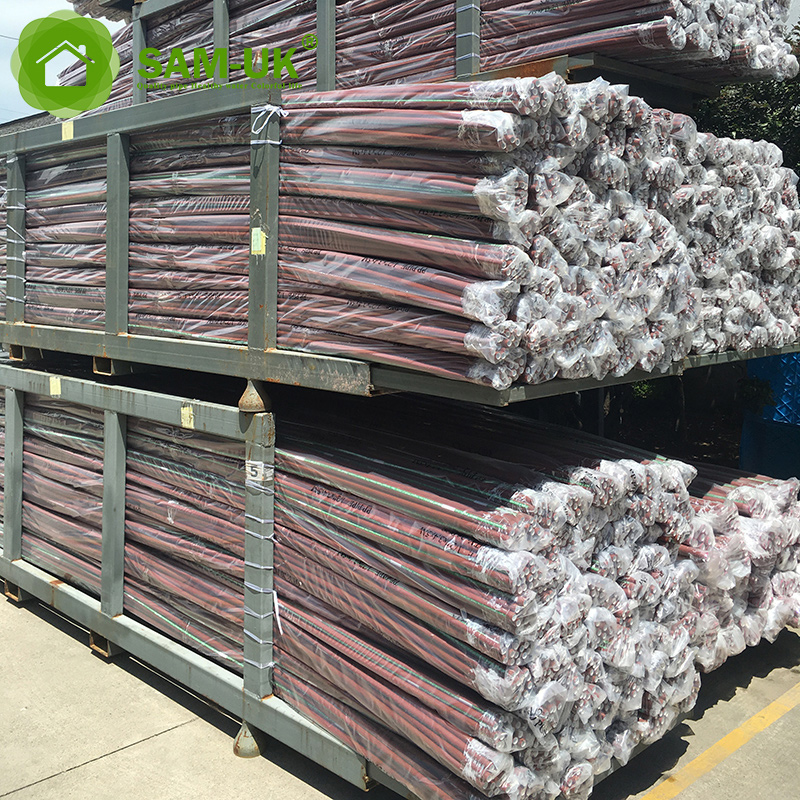
A distributor that stocks only one leg of that chain leaves orders on the table. The contractors winning these municipal jobs buy the whole bundle — main pipe, service line, interior repipe material, fittings, valves — and they buy it from suppliers who hold the right certifications: NSF/ANSI 61 for potable contact, AWWA C900 for pressure main, UPC/NSF listing for the fittings. A manufacturer that carries NSF, UPC, and ETL listings simultaneously, keeps metric and imperial tooling in-house, and ships in 30 days is the kind of vendor municipal distributors can plan around — which is exactly how SAM-UK (est. 1995, 50,000 t/yr capacity) positions itself in this market.
What Smart Suppliers Should Do Right Now
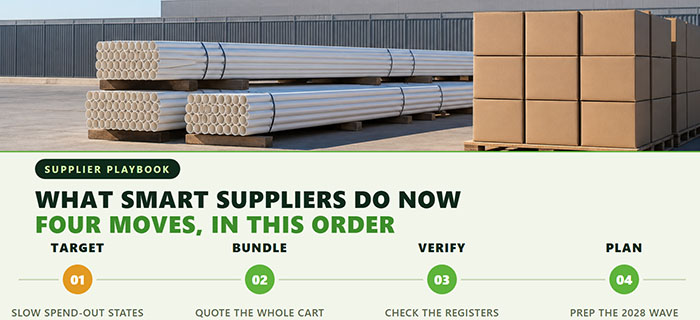
- Target states with slow spend-out rates. They have allocated but unspent DWSRF money and urgent Nov 2027 inventory deadlines — the sales window is open now.
- Build the full bundle, not one SKU. Main pipe + service line + interior + fittings + valves is how municipal jobs get quoted. Missing one leg loses the whole cart.
- Verify certification scope before quoting. NSF/ANSI 61, AWWA C900, UPC, and state-specific listings are bid requirements, not nice-to-haves. Check the public registers yourself — a lapsed listing kills a bid you already priced.
- Plan for the 2027–2028 bid wave. Inventory completions by Nov 2027 convert to design and bid work through 2028. Stocking decisions made in Q4 2026 position you for that wave.
The Risks Nobody Puts in the Press Release
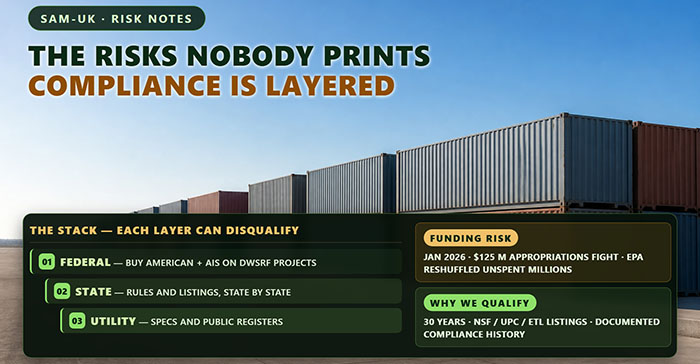
Funding uncertainty is real. The January 2026 appropriations fight over $125 million in LSLR money shows the political fragility of this program. Some states have spent slowly enough that the EPA had to reshuffle unspent millions — if your customer base sits in a slow-spend state, don’t bank on that pipeline. And watch the material substitution pressure: every dollar of federal money comes with Buy American and American Iron and Steel (AIS) requirements on DWSRF projects, which shapes where imported fittings can and cannot land. Knowing the compliance layering — federal AIS rules on top of state rules on top of utility specs — is the difference between winning a municipal tender and being disqualified in the first round. That’s the reality a 30-year factory with North American listings (NSF/UPC/ETL) and documented compliance history is built for.
Frequently Asked Questions
Is 2026 really the last year of federal lead pipe funding?
For the IIJA supplemental program, yes. FY 2026 is the final year of the $3 billion-per-year IIJA lead service line replacement funding (per NACo, Jun 2026). The EPA announced the last round — $2.9 billion — on May 20, 2026. The LCRI mandate itself continues to 2034, but new federal money after FY 2026 is not guaranteed.
What is the November 2027 deadline?
Under the LCRI, water systems must complete a baseline inventory of their service line materials by November 1, 2027 and begin replacing lead lines (EPA guidance, Aug 2026). Inventory completion is the trigger for design and procurement waves that follow through 2028.
Are lead service lines replaced with PVC pipe?
No. Service lines are typically replaced with copper, PEX, or HDPE. The PVC opportunity sits one layer out: distribution mains opened in the same trench (often AWWA C900 PVC), plus CPVC interior repipes triggered when partial replacements disturb galvanized or lead-soldered interior piping.
What certifications do pipe suppliers need for these projects?
Municipal and DWSRF-funded projects typically require NSF/ANSI 61 for potable water contact, AWWA C900 for PVC pressure mains, and UPC/NSF listings for fittings and valves. Federal projects add Buy American and American Iron and Steel (AIS) requirements.
How long do utilities have to finish replacing lead lines?
The LCRI gives water systems ten years from the October 2024 final rule — so roughly until 2034 — to replace lead service lines “as quickly as feasible,” with the Nov 2027 inventory milestone as the first hard checkpoint.
About SAM-UK
SAM-UK are a professional 20+ years manufacturer in producing vinyl building profile products and PVC , CPVC , PPH , PPR , PP pipes and pipe fittings, valves, taps and so on. We own the certificates of SGS\SONCAP\ISO9001\CE\NSF,support color /size customization. Welcome to consult for Catalog and Product. you can contact us at email [email protected]