Introduction
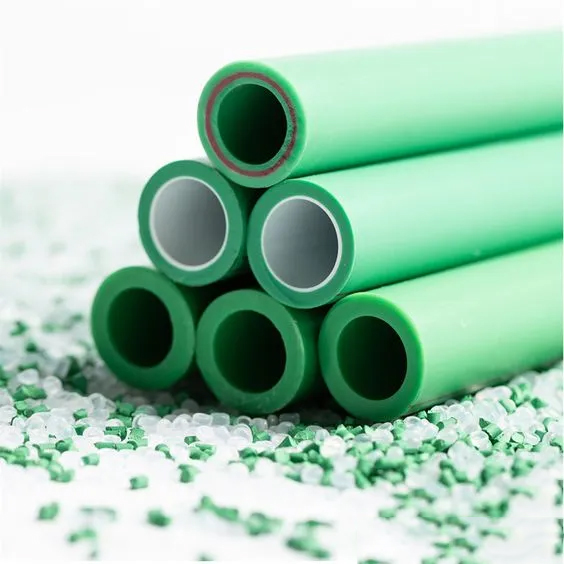
PPR pipe stands for Polypropylene Random Copolymer pipe – a modern thermoplastic piping material that is transforming plumbing systems around the world. In simple terms, it is a type of plastic pipe engineered specifically for hot and cold water supply, known for its exceptional durability, chemical resistance, and leak-proof heat fusion connections. If you have ever wondered what pipe material offers the best balance of performance, safety, and cost, PPR pipe Series is the answer you have been looking for.
This comprehensive guide will explain everything you need to know about PPR pipe, from what it is and how it works, to the different types available, the international standards that govern its quality, its pros and cons, and the hottest trends shaping the PPR pipe market in 2026.
1. What Is PPR Pipe?
PPR pipe is a high-performance piping system manufactured from Polypropylene Random Copolymer, a type of thermoplastic polymer that belongs to the polypropylene family. The “random copolymer” designation refers to how ethylene molecules are randomly incorporated into the polypropylene chain during production, which enhances the material’s flexibility, impact strength, and thermal resistance.
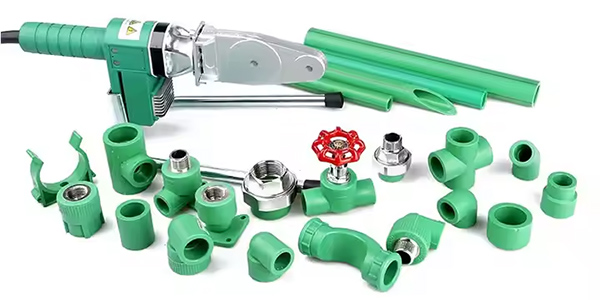
Technically classified as Type 3 Polypropylene according to ISO 15874 standards, PPR is engineered at the molecular level to meet the rigorous demands of modern plumbing systems. Unlike traditional pipes that rely on mechanical threads or chemical glues—which often become the weakest link over time—a PPR pipe system operates as a fully integrated, homogenous network. Through heat fusion (socket welding), the PPR pipes and fittings are molecularly bonded to form a single, continuous piece, creating a seamless, leak-proof connection that maintains system integrity even under demanding conditions.

2. Key Properties & Benefits of PPR Pipe
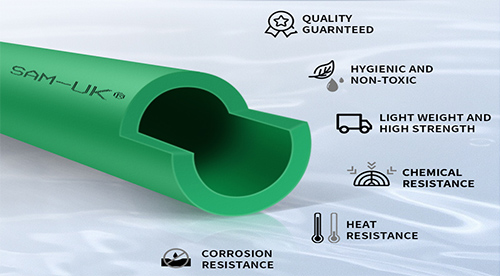
- Health and Safety: Non-toxic, BPA-free, lead-free. Compliant with ISO 15874, NSF/ANSI 61, WRAS.
- Corrosion and Scale Resistance: No rust, no scaling, maintains high flow efficiency.
- High Temperature and Pressure Tolerance: Continuous 70°C, short-term 95°C; up to PN25.
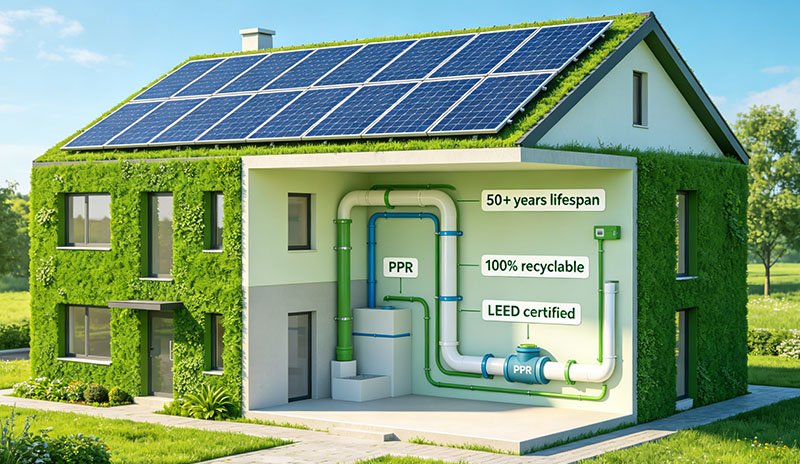
- Long Service Life: 50+ years under normal conditions.
- Leak-Proof Connections: Heat fusion creates molecular bonds stronger than the pipe itself.
- Lightweight and Easy to Install: 1/8 the weight of steel, faster installation.
- Eco-Friendly and Recyclable: 100% recyclable, supports LEED/BREEAM.
3. Types of PPR Pipe
- Standard PPR Pipe (Non-Reinforced)– PN10–PN16, up to 70°C. Ideal for residential cold/hot water.
- Glass Fiber Reinforced PPR (FR-PPR / GF-PPR)– PN20, up to 75°C. Reduced thermal expansion.
- Aluminum Layer Reinforced PPR (PPR-AL-PPR)– PN25, up to 95°C. Minimal expansion, high rigidity.
- PPR-CT Pipe– Modified crystallinity for industrial high-stress environments.
- PPR-FR Pipe (Flame Retardant)– Fire-resistant additives for high-rise buildings.
- PPR-Al-PE Pipe– Increased flexibility for tight spaces.
- Oxygen Barrier PPR Pipe (EVOH)– Prevents oxygen diffusion in heating systems.

4. PPR Pipe Sizes, SDR & PN Ratings
S Series | PN Rating (bar) | PN Rating (PSI) | Typical Use |
S5 | 12.5 bar | ~181 PSI | Cold water |
S4 | 16 bar | ~232 PSI | Cold water / mixed |
S3.2 | 20 bar | ~290 PSI | Hot water (standard) |
| S2.5 | 25 bar | ~363 PSI | Hot water (high pressure) |
| S2 | 32 bar | ~464 PSI | Industrial / special |
SDR (Standard Dimension Ratio) = dn / en. Common diameters: 20mm to 160mm.
5. International Standards for PPR Pipe
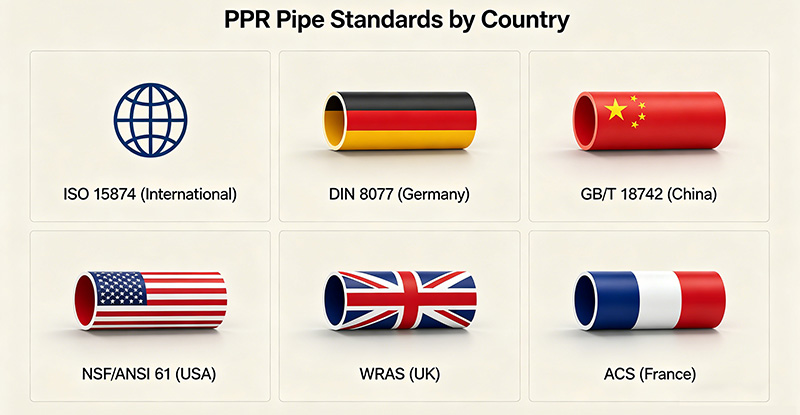
- ISO 15874– Primary global standard for hot/cold water PPR systems.
- DIN 8077 / DIN 8078– German standards (dimensions & technical specs).
- GB/T 18742– Chinese national standard.
- NSF/ANSI 61– North American potable water standard.
- WRAS(UK) and ACS (France) – Regional certifications.
6. Applications & Uses of PPR Pipe
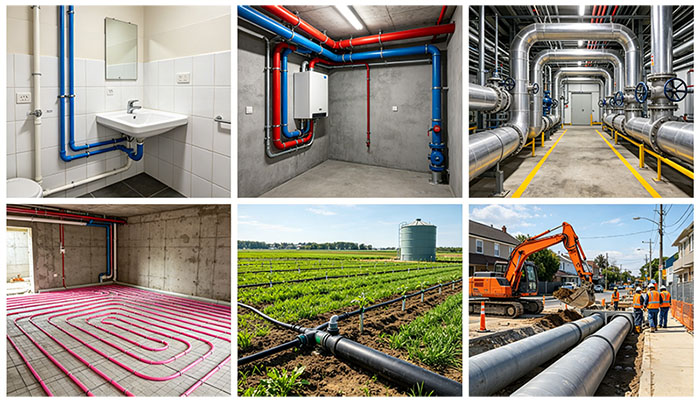
- Residential Plumbing: Hot/cold water supply, safe drinking water.
- Commercial Buildings: Hotels, hospitals, schools – hygienic & durable.
- Industrial Applications: Chemicals, compressed air, industrial fluids.
- Heating Systems: Underfloor heating, radiator circuits, solar water heating.
- Agricultural Irrigation: Drip irrigation, sprinkler systems, livestock water.
- Municipal Water Supply: Main networks, leak-proof joints.
7. PPR Pipe vs Other Materials
Material | Safe for Drinking Water? | Lifespan | Max Temp | Key Advantages |
| Yes | 50+ years | 95°C | Non-toxic, corrosion-free, leak-proof fusion joints | |
Yes | 50+ years | 204°C | Durable, bacteria-resistant | |
PEX PIPE | Yes | 40–50 years | 82°C | Flexible, easy to install |
| CPVC PIPE | Yes | 40+ years | 93°C | Low cost |
| Galvanized Steel | Risk of lead | 20–30 years | — | Strong, historically common |
8. Installation: Heat Fusion Welding
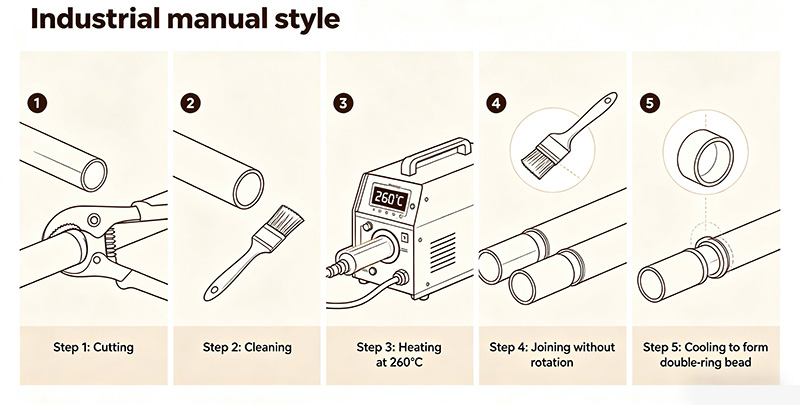
Heat fusion creates a molecular bond between pipe and fitting. Steps: Cut → Clean → Heat (≈260°C) → Join → Cool. No rotation during fusion. In winter below 5°C, heating time extended by 50%. Linear expansion ~0.15 mm/m°C – use expansion loops.
9. PPR Pipe Market Trends in 2026
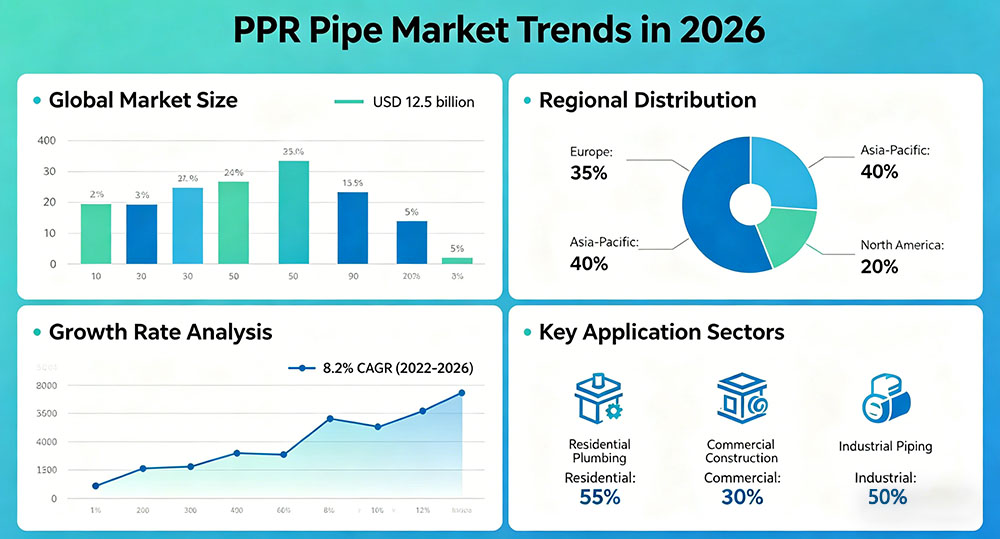
- Global market value: US$8.9B (2025) → US$15.6B by 2032 (CAGR 8.5%).
- Regional share: Asia-Pacific 50%, Europe 20%, North America 19%.
- Top trends: Green building (LEED/BREEAM), IoT smart plumbing, fiber-reinforced pipes, stricter lead-free regulations, labor shortage driving heat-fusion adoption.
10. Common FAQs About PPR Pipe
1. Is PPR safe for drinking water?
Yes – BPA-free, lead-free, NSF/ANSI 61 certified.
2. What is the lifespan?
50+ years.
3. Can it be used for hot water?
Yes, continuous 70°C, peak 95°C.
4. Difference between PPR, PPRC, PP-R?
They are essentially the same – Polypropylene Random Copolymer.
5. Is PPR better than PEX?
PPR handles higher temperatures; PEX is more flexible. Choose based on application.
6. Can PPR be exposed to sunlight?
No – UV degrades it; use UV-protective insulation or UV-stabilized variants.
7. What temperature is too high?
Continuous >70°C reduces lifespan; reinforced types handle up to 95°C.
8. How much does PPR pipe cost?
US$1.20–US$2.40 per meter (20–25mm diameters).

11. Conclusion
PPR pipe offers a unique combination of non-toxic composition, corrosion resistance, high temperature tolerance, leak-proof fusion joints, and a 50-year lifespan. As plumbing moves toward sustainability, smart integration, and stricter water safety standards, PPR pipe and fittings is positioned for accelerated growth worldwide. Always verify ISO 15874 or equivalent standards, select correct PN rating, and use certified heat fusion tools for optimal performance.
About SAM-UK
SAM-UK are a professional 19+ years manufacturer in producing vinyl building profile products and PVC , CPVC , PPH , PPR , PP pipes and pipe fittings, valves, taps and so on. We own the certificates of SGS\SONCAP\ISO9001\CE\NSF,support color /size customization. Welcome to consult for Catalog and Product. you can contact us at email [email protected]