Introduction
When planning a residential or commercial plumbing system, one of the most important decisions is choosing the right piping material. PVC pipe and CPVC pipes are two of the most widely used thermoplastic piping solutions, but they perform very differently under hot-water conditions.
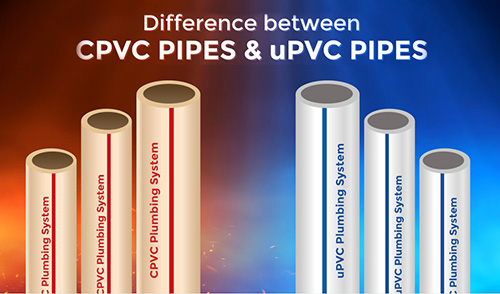
This guide explains their key differences, performance characteristics, applications, temperature ratings, advantages, and limitations—so you can confidently choose the best pipe for your plumbing project.
What are PVC pipe and CPVC pipe?
1. PVC Pipe
PVC (Polyvinyl Chloride) pipe is a lightweight, corrosion-resistant plastic pipe commonly used for cold-water plumbing, irrigation systems, drainage, and venting applications. It is valued for:
Low cost
Easy installation
Chemical resistance
Smooth interior for good flow
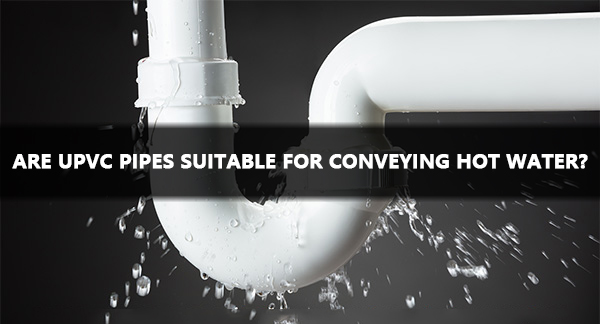
However, PVC pipe has limited heat resistance, making it unsuitable for hot water or applications above its temperature rating.
2. CPVC Pipe
CPVC (Chlorinated Polyvinyl Chloride) pipe is a modified version of PVC created through a chlorination process. This increases its:
Temperature resistance
Pressure capacity
Chemical stability
CPVC is specifically engineered for hot-water plumbing, including residential, commercial, and industrial systems.

Key Temperature & Pressure Differences
Temperature Ratings
| Pipe Type | Maximum Operating Temperature | Suitable for Hot Water? |
|---|---|---|
| PVC | ~140°F (60°C) | ❌ No |
| CPVC | ~200°F (93°C) | ✅ Yes |

Pressure Ratings at High Temperature
PVC loses strength quickly when exposed to heat. CPVC retains structural integrity in hot water, which is why most plumbing codes require CPVC or other high-temp materials for domestic hot-water distribution.
CPVC vs. PVC: What Are the Main Differences?
1. Heat Resistance
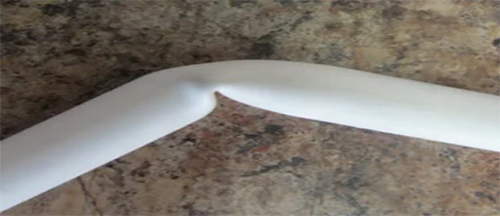
PVC softens under high temperatures and may deform or fail.

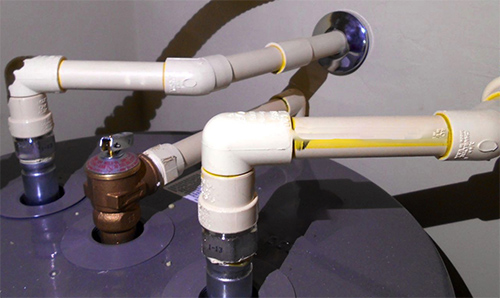
CPVC maintains strength, making it safe for water heater outlets and continuous hot-water lines.

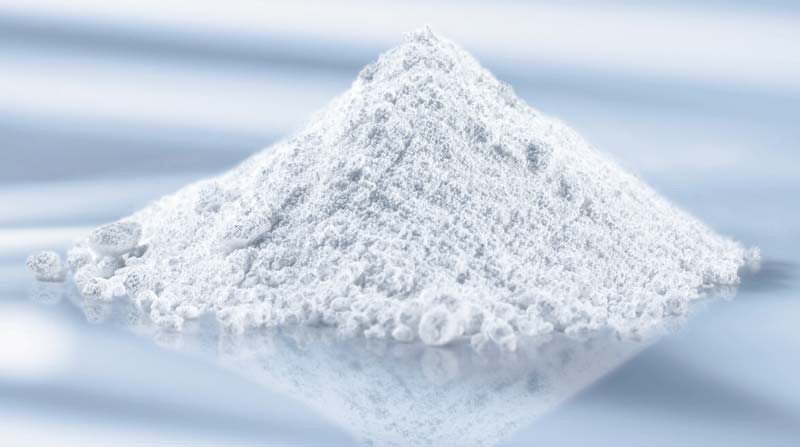
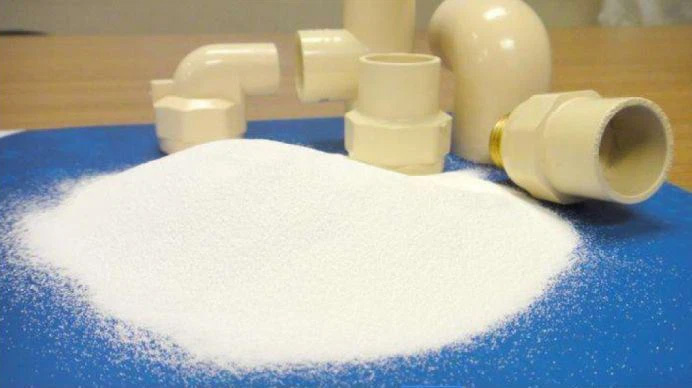
2. Material Composition
PVC: non-chlorinated base polymer

CPVC: chlorinated polymer with improved thermal and chemical resistance

3. Color and Identification
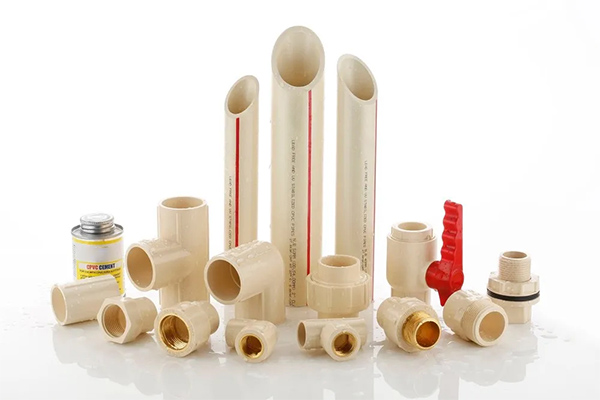
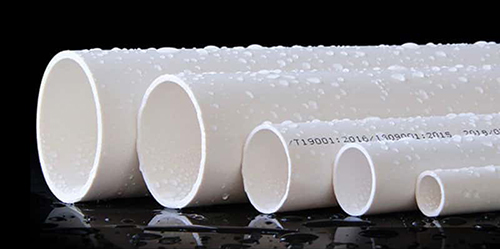
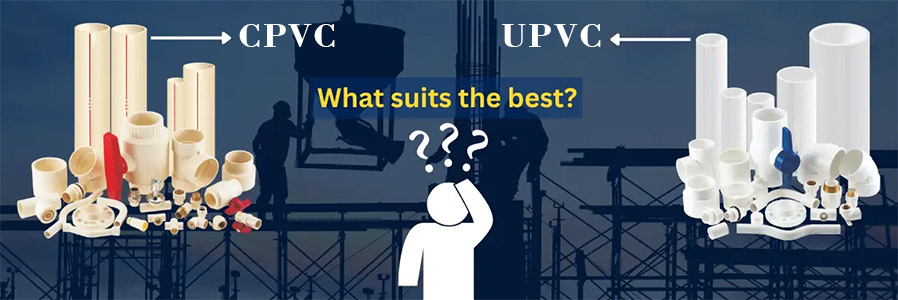
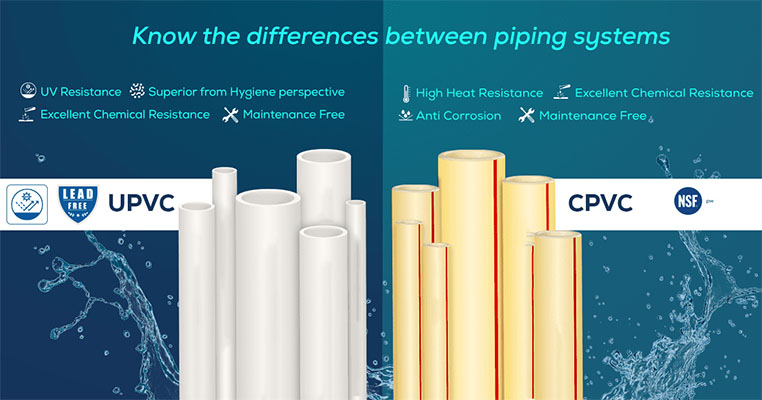
PVC is typically white or light gray.

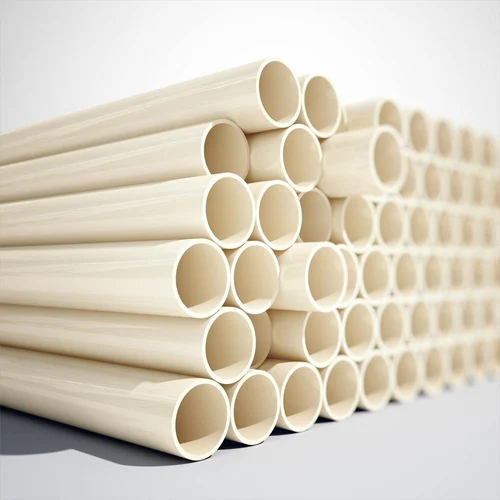
CPVC is usually off-white, cream, or light yellow.


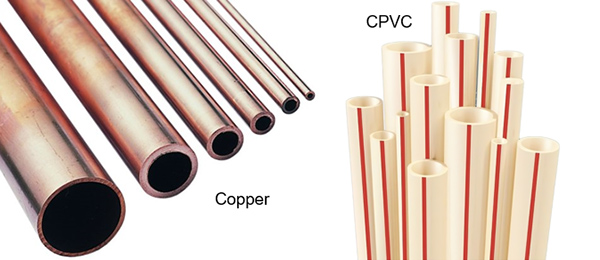
4. Sizing Standards
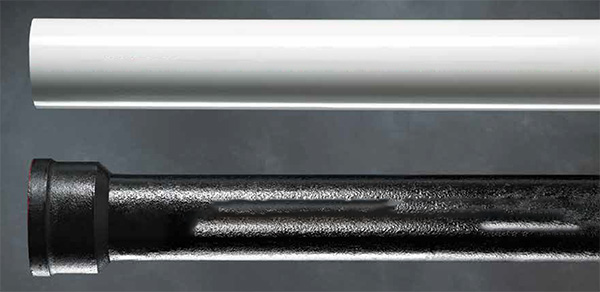
PVC uses IPS (Iron Pipe Size).

CPVC is available in both IPS and CTS (Copper Tube Size).

5. Joining Methods
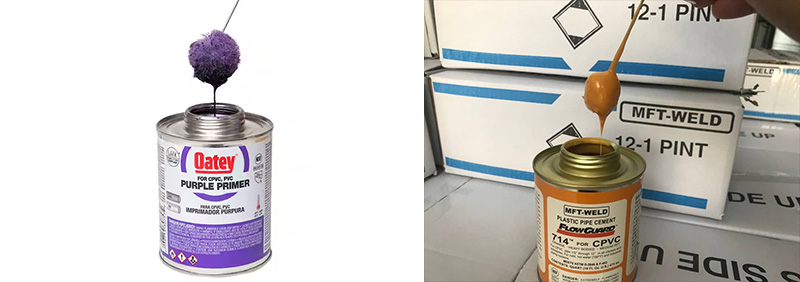
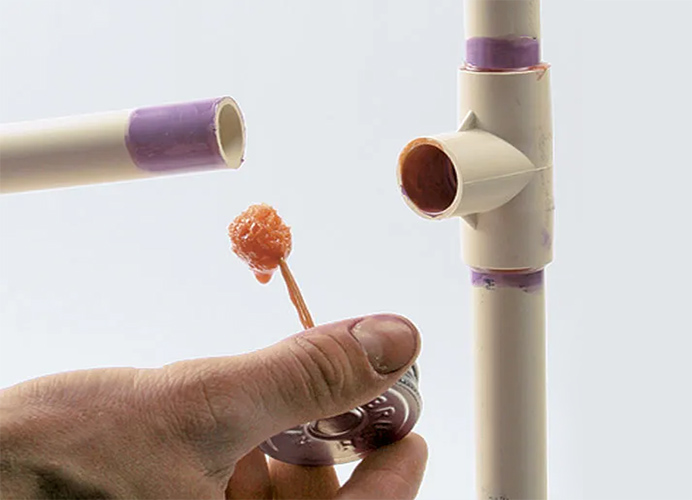
- Both use solvent cement, but CPVC requires CPVC-specific cement. PVC cement cannot be used on CPVC.

6. Cost
- CPVC is more expensive than PVC, but cost is justified in hot-water applications due to safety and longevity.


Which Pipe Is Better for Hot-Water Plumbing?
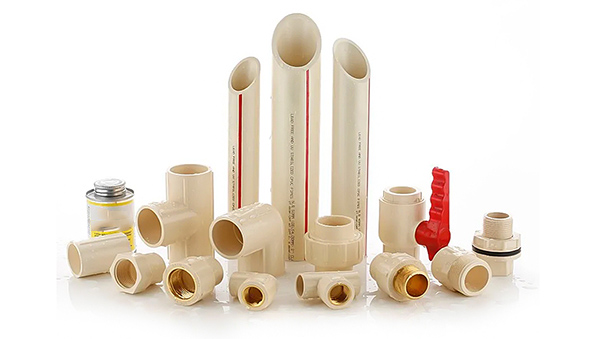
The clear answer: CPVC PIPE FITTINGS
If your system will carry hot water—showers, faucets, household plumbing, water heaters, circulation lines—CPVC is the correct and code-approved choice. PVC should only be used for cold-water lines, drainage, venting, irrigation, and low-temperature systems.
Advantages of CPVC for Hot-Water Systems
Withstands continuous exposure to hot water
Compatible with hot-water recirculation systems
Long service life
Resistant to scaling and corrosion
Meets plumbing codes for hot-potable water
Lower installation cost than copper

Advantages of PVC for Cold-Water and Drainage Systems
More affordable than CPVC
Easier to cut and handle
Widely available with many fittings
Ideal for DWV (drain-waste-vent) systems
Excellent chemical resistance
When to Use PVC Instead of CPVC
CPVC is a better choice for:
Cold-water supply lines
Underground irrigation systems
Drainage, waste, and vent lines
Electrical conduit
Pool and spa systems (cold side)
Avoid using PVC anywhere hot water may flow.

When to Use CPVC Instead of PVC
CPVC is ideal for:
Domestic hot-water plumbing
Commercial hot-water distribution
Industrial fluid handling requiring higher temperatures
Water heater connections
Recirculating systems
Is CPVC Compatible With PVC?
Yes, PVC and CPVC can be connected if the proper transition fittings are used.
However:
Do not mix PVC cement with CPVC pipe
Use CPVC transition solvent cement when joining the two

Which One Lasts Longer: PVC or CPVC?
Both materials can last 50+ years under proper operating conditions.
However, CPVC typically lasts longer in mixed hot-and-cold systems because PVC degrades faster under heat exposure.
CPVC vs PVC: Pros and Cons Summary
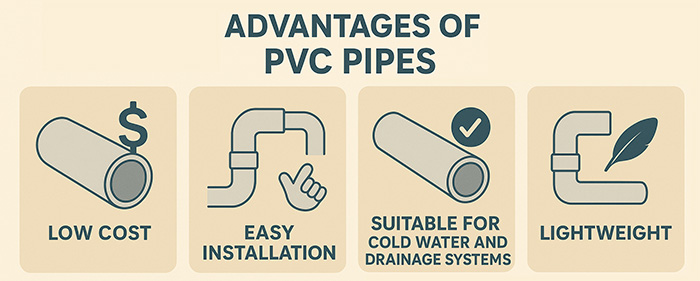
PVC Pros
Low cost
Easy installation
Great for cold water and drainage
Lightweight
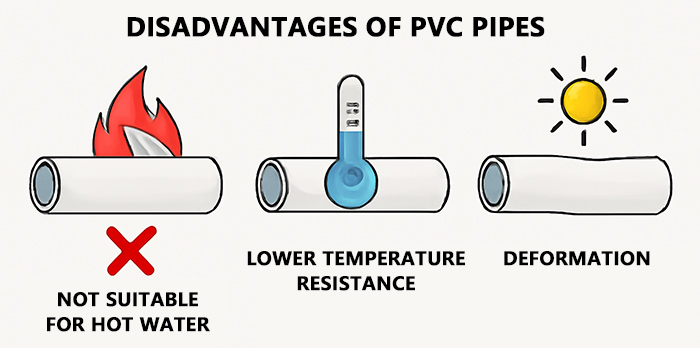
PVC Cons
Not suitable for hot water
Lower temperature resistance
Can warp under extended UV exposure unless protected
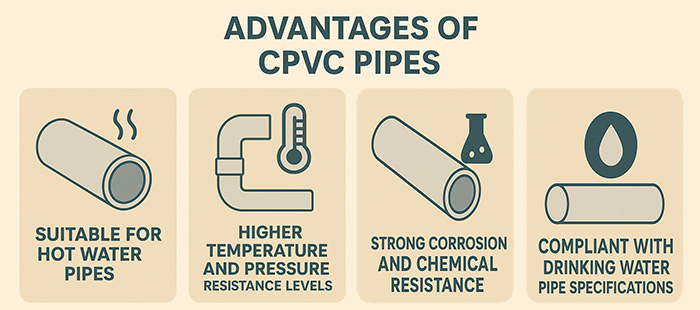
CPVC Pros
Safe for hot-water plumbing
Higher temperature & pressure ratings
Strong resistance to corrosion & chemicals
Code-approved for potable water
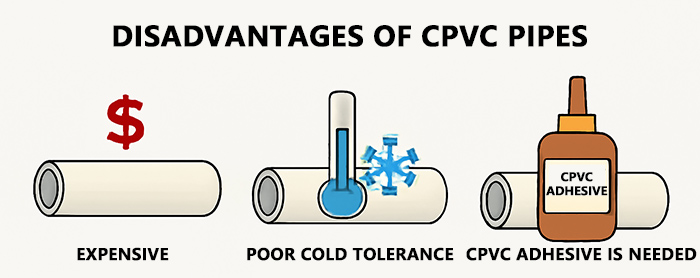
CPVC Cons
More expensive than PVC
Less flexible in cold outdoor environments
Requires CPVC-specific cement
Frequently Asked Questions
1. Can PVC be used for hot water?
No. PVC is not rated for hot-water plumbing and may deform or fail.
2. Is CPVC safe for drinking water?
Yes. CPVC is NSF-certified for hot and cold potable water.
3. Can I use CPVC on a water heater?
Yes—CPVC is approved for hot-water lines up to 200°F.
4. Is CPVC better than PPR or copper for hot water?
CPVC is often preferred because it balances cost, durability, ease of installation, and temperature resistance.
Conclusion: Which One Should You Use?
For any hot-water plumbing system, CPVC PIPE is the superior and code-approved option. PVC simply cannot withstand the temperature or pressure demands of hot-water distribution. Use PVC for cold water and drainage; use CPVC for hot water, water heaters, and mixed-temperature systems.
About SAM-UK
SAM-UK are a professional 19+ years manufacturer in producing vinyl building profile products and PVC , CPVC , PPH , PPR , PP pipes and pipe fittings, valves, taps and so on. We own the certificates of SGS\SONCAP\ISO9001\CE\NSF,support color /size customization. Welcome to consult for Catalog and Product. you can contact us at email [email protected]