Article Introduction
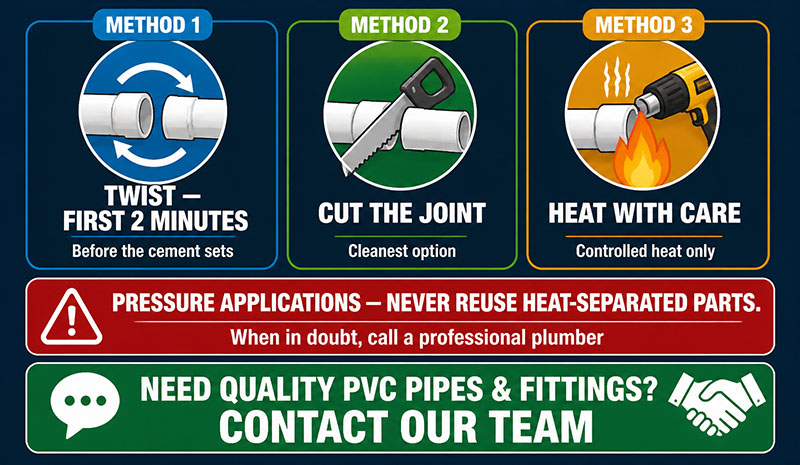
Need to remove a PVC pipe or fitting that’s already glued in place? Here’s the honest answer up front: PVC joined with solvent cement cannot be unglued. The joint is a chemical weld, not a glue bond. But it can be separated — using one of the three methods in this guide: twisting, cutting, or heating.
Note: these methods are for non-pressure applications. If you’re removing PVC pipe or PVC pipe fittings from a pressure system, follow the standards that apply to that service and do not reuse affected parts.
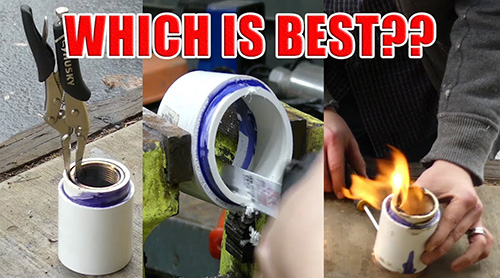
Why PVC Can’t Be Unglued
Primer and solvent cement don’t glue PVC — they weld it. When applied to the pipe and fitting surfaces, the cement dissolves the PVC and the two pieces fuse into a single piece of material. There’s no adhesive layer to peel, which is why no amount of force, solvent, or “home trick” will separate a properly made joint without damaging the parts.
What you can do is separate the joint before the cement fully cures, or cut or heat the joint once it has cured. All three approaches are covered below.
Method 1: Twist the Fitting Apart Before the Cement Sets
You have less than two minutes from assembly to correct a mistake. While the solvent cement is still soft, grip the pipe in one hand and the fitting in the other, twist hard in the direction opposite to the one you used when seating the joint, and pull at the same time. The partially formed weld will usually give way.
This only works if you catch the error immediately. Once initial set occurs — a matter of minutes — twisting won’t help; it will just deform or crack the PVC.

Method 2: Cut Off the Joint with a Hacksaw
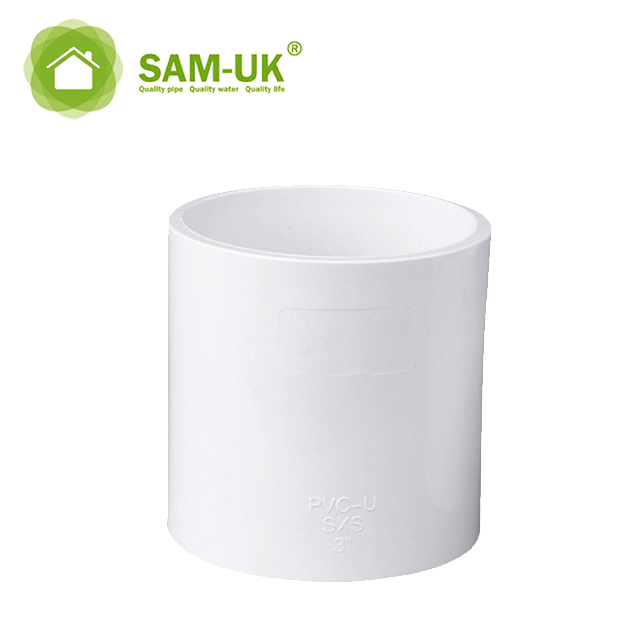
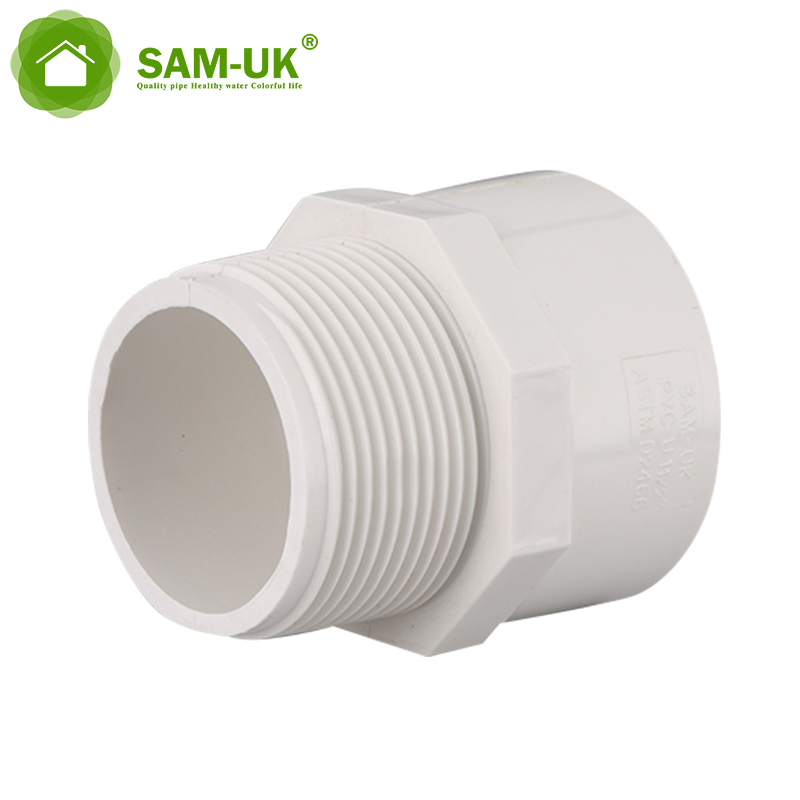
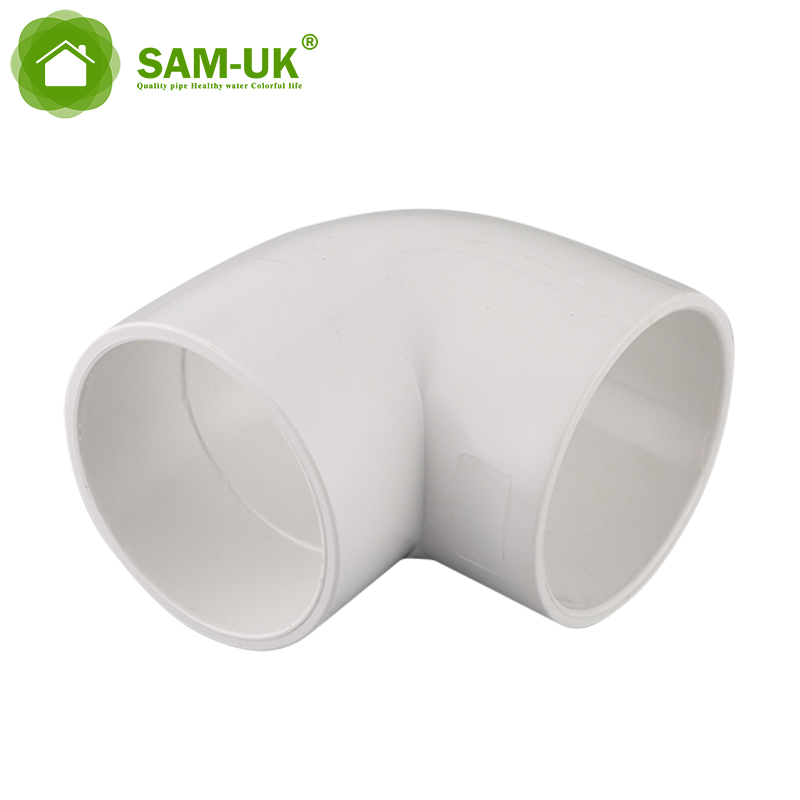
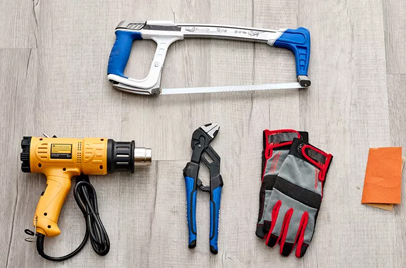
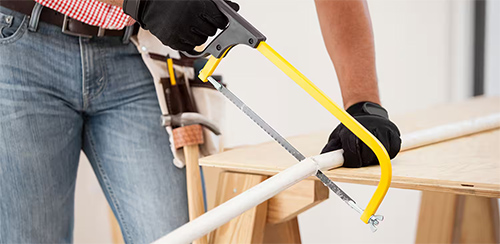
If twisting failed, cutting is the cleanest option. Decide before you cut what you’ll replace: the fitting, the pipe, or both. In most cases the fitting costs less than the pipe run, so cut close to the fitting’s hub, save the pipe, fit a new fitting — and if you lose length, make it up with a coupling or a nipple.
Use a fine-tooth hacksaw, cut square to the pipe axis, and file the cut end to remove burrs before solvent-welding the replacement piece.
Method 3: Heat the Joint to Soften the PVC
Heat softens PVC and weakens the weld. Apply directed heat (heat gun) to the joint, keeping below the material’s deformation temperature, then twist and pull while the PVC is soft to separate the parts.
Important safety note: parts separated with heat must not be reused in pressure applications. Heat compromises the structural integrity of both the pipe and the fitting. This method suits craft and non-plumbing DIY projects; in pressurized plumbing, discard the parts and use new material.

Method 4: Try these Alternatives to Ungluing PVC pipe fitting or pipe
The likelihood you caught the mistake and were able to pull apart the connection before it cured is slim. Since you can’t unglue the PVC solvent weld, you will find success with the alternatives to ungluing PVC pipe & pipe fittings. Just remember to be prepared: after using one of these three solutions to taking apart PVC pieces, you’ll have to replace a few parts. To ensure you won’t run into a situation where you need to know how to unglue PVC, always dry fit your pieces and use a marker to mark connection points.
Prevention: How Not to End Up Here
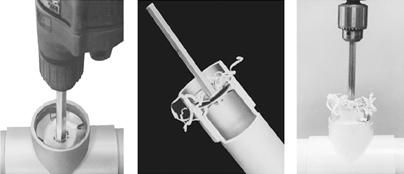
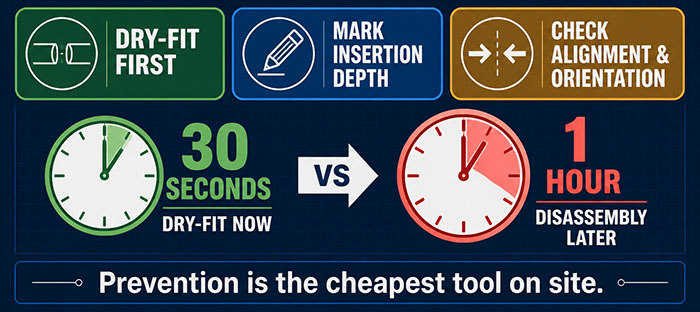
The best fix is avoiding the mistake in the first place. Always dry-fit the pieces before applying cement, and mark the insertion depth with a marker. Check alignment and fitting orientation before you glue. Thirty seconds of dry-fitting saves an hour of disassembly.
Summary
Separating a glued PVC pipe or fitting is possible — but not by ungluing it: twist within the first two minutes, cut the joint, or heat it with care. In pressure applications, never reuse parts separated by heat, and when in doubt, call a professional plumber.
To learn more about PVC pipes and fittings, contact our team — we’ll provide quality solutions.
About SAM-UK
SAM-UK are a professional 18+ years manufacturer in producing vinyl building profile products and PVC , CPVC , PPH , PPR , PP pipes and pipe fittings, valves, taps and so on. We own the certificates of SGS\SONCAP\ISO9001\CE\NSF,support color /size customization. Welcome to consult for Catalog and Product. you can contact us at email [email protected]