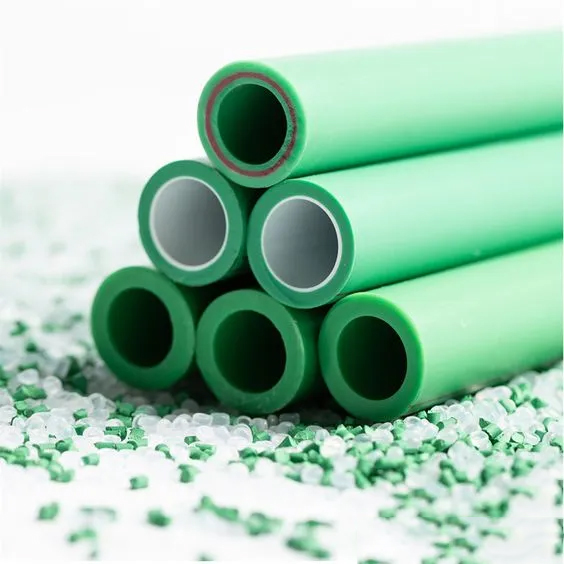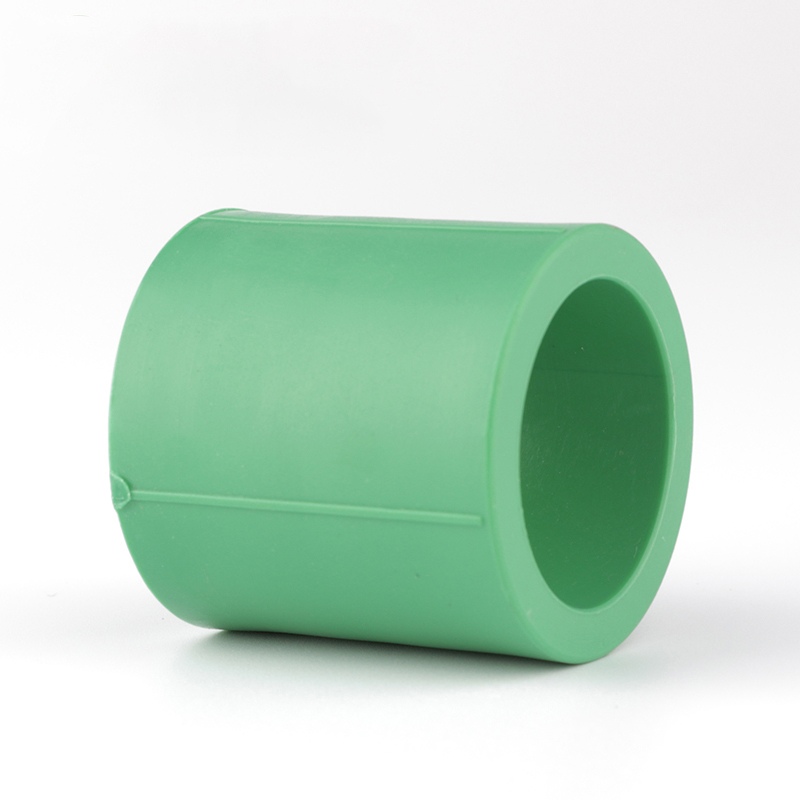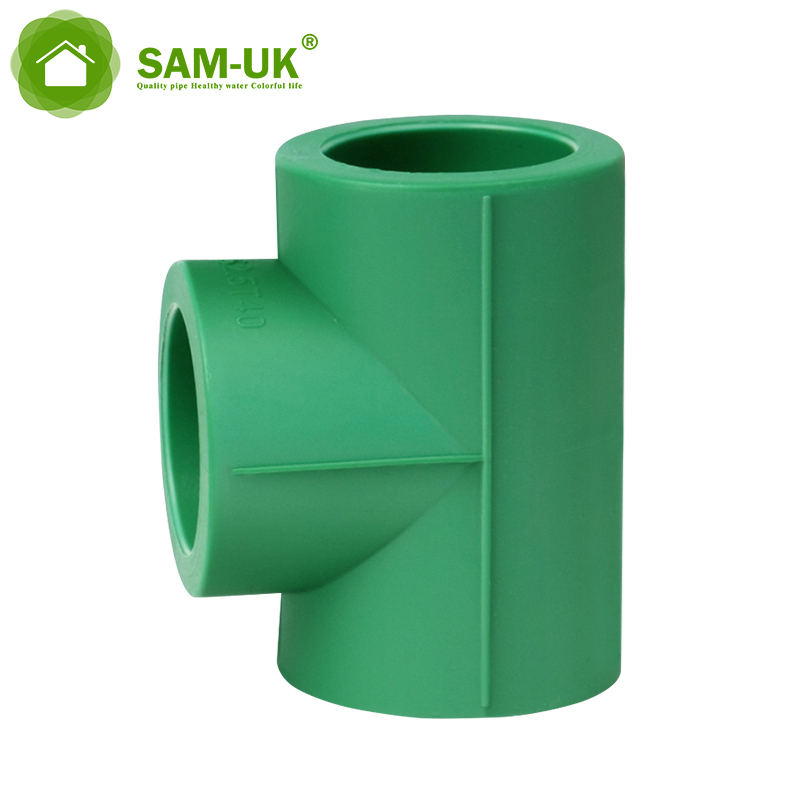
Article Introduction
PPR pipe is joined by heat — socket fusion at 260°C ± 10°C — and the two numbers that decide whether a joint holds are insertion depth and heating time. Get the depth right and the pipe seats fully in the socket; get the time right and the melt is complete but not overheated. This guide covers the depth/time table for 16mm to 110mm, the 7-step connection process, and the one rule that prevents most failures: match pipe and fittings from the same manufacturer, and follow their spec sheet.
Precautions before use
Clean the pipe end and the fitting socket before heating — oil, dust, or moisture at the joint is a leak waiting to happen. Cut the pipe square (a pipe cutter, not a saw), and check that the pipe end reaches the full depth of the socket when dry-fitted — if it bottoms out early or rattles, the joint geometry is wrong.
One temperature fact that gets repeated backwards on jobsites: PPR melts at 260°C ± 10°C, which is about 20°C higher than PPB — not lower. And cold weather doesn’t make joints “better” — below 5°C, extend the heating time by roughly 20–50% and let the joint cool longer before moving it. (Cold-weather adjustment is experience-based — follow the machine and pipe manufacturer’s instructions.)
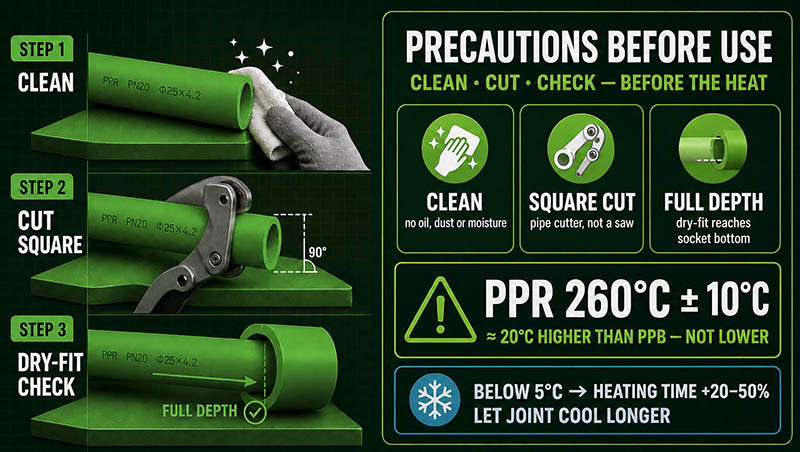
Use the standard settings of the hot melt machine
Hot melt standard time:
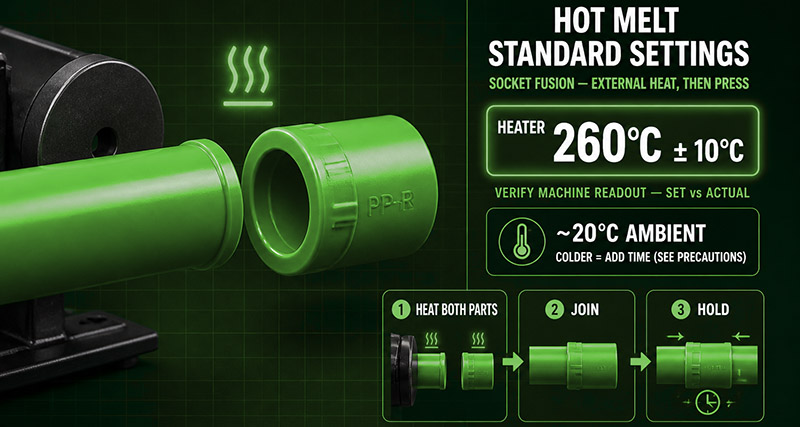
Hot Melt Standard Settings
Heater temperature: 260°C ± 10°C (verify against the machine’s readout; most machines show set vs. actual temperature). Times below assume an ambient temperature around 20°C — in colder conditions, add time per the precaution above.
A Note on Electrofusion (Separate from Hot Melt)
Hot melt above is socket fusion — both parts are heated externally and pressed together. Electrofusion is a different process: the fitting has an embedded heating coil, and the machine feeds a controlled current (time + voltage from the fitting’s barcode) to melt the fitting onto the pipe. It’s faster, less affected by the installer’s skill, and the fittings cost several times more — in practice it earns its price on large diameters and repairs where a clean socket fusion isn’t practical. Don’t mix the two methods’ parameters: the depth/time table above is for socket fusion only.
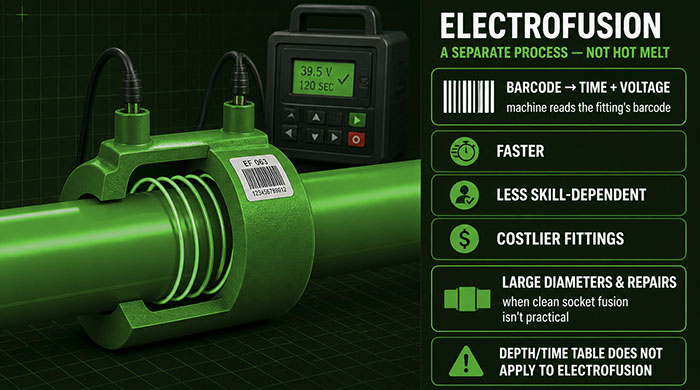
Connection process of PPR pipes and fittings
Connection process: check → cut → clean connect end → insert → check → electric welding → cooling.
(1) Check:Before connecting, clean the dust and foreign matter on the PPR pipes and fittings, check the appearance quality of the pipes and fittings, and remove the broken ones, and remove the surface oil and burrs.
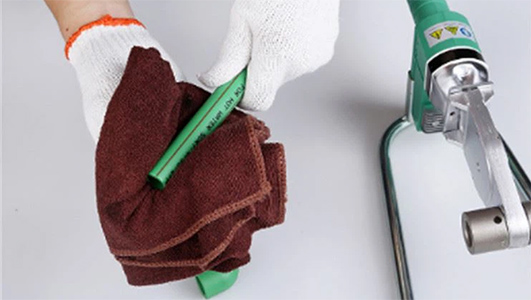
(2) Cut: The connect end should be perpendicular cut to ensure enough melt area. Usually cut tool is rotary cutter, saw bow, plastic pipe scissors etc. Do not allow high temperature to avoid the deformation of pipe end.
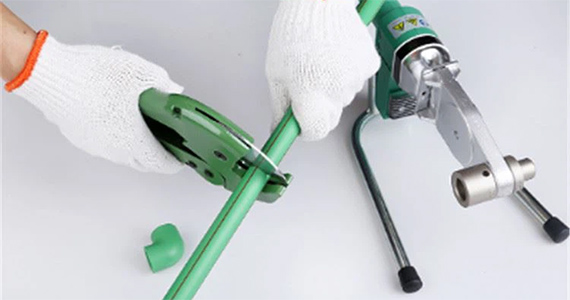
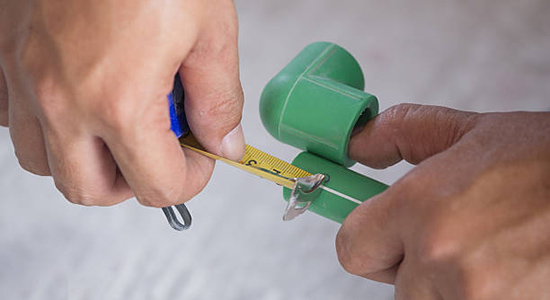
(3) Clean the connect end and insert deep line: Use fine sandpaper, scraper scraping the surface of the pipe oxide layer. Use clean cotton clean the connect side of pipe and fitting. Sign the insert deep line.
(4) Electric welding by the PPR welding machine: Heat time with electric and voltage should meet the factory regulation of the electric melt welding machine and electric melt fitting, in order to connect in a best supply voltage and best heat time situation.
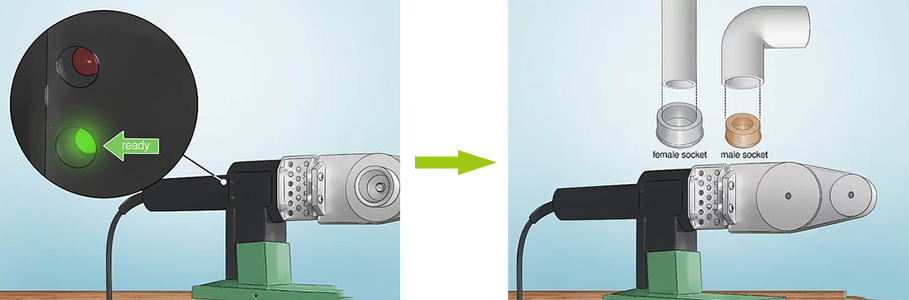
(5) Insert: Insert the electric fitting into pipe until the required deep, connect together with welding machine.

(6) Check: Adjust pipe’s or fitting’s position on a line to avoid not firmly due to miss connect or not sealed.
(7) Cooling: Due to PPR pipe can reach max patience strength only after cooling to room temperature. During cooling, external force will make fitting and pipe in two lines and effect welding quality. So, cannot move connection or produce external force during cooling.

Conclusion
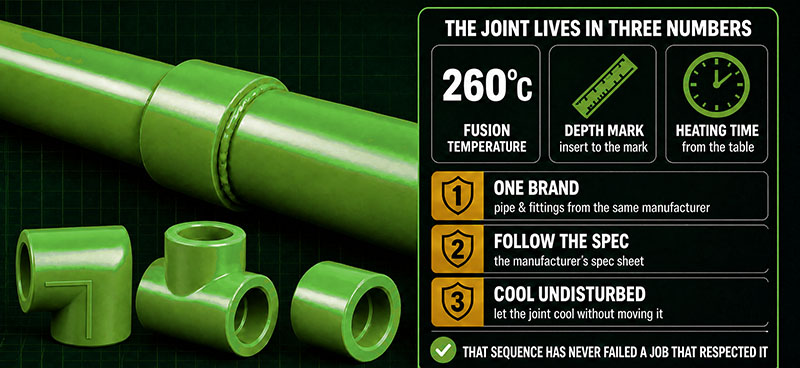
Two joining methods exist for PPR — socket fusion (hot melt) and electrofusion — and socket fusion is the workhorse for most plumbing. The joint’s quality lives in three numbers: 260°C, the depth mark, and the heating time from the table. Stay with one brand for pipe and fittings, follow the manufacturer’s spec, and let the joint cool undisturbed — that sequence has never failed a job that respected it.
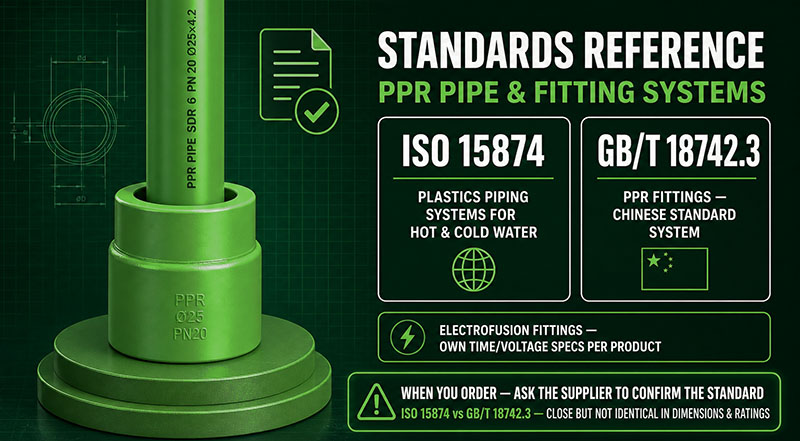
Standards Reference
PPR pipe and fitting systems are covered by ISO 15874 (plastics piping systems for hot and cold water) and GB/T 18742.3 (PPR fittings in the Chinese standard system); electrofusion fittings carry their own time/voltage specs per product. When you order, ask the supplier to confirm the standard their PPR follows — ISO 15874 and GB/T 18742.3 are close but not identical in dimensions and ratings.
Frequently Asked Questions
1. What temperature do I set the hot melt machine to for PPR?
260°C ± 10°C. Below that the melt is incomplete and the joint is weak; above it, the pipe wall degrades and the bore can close up. Set it, wait for the machine to stabilize, then heat.
2. How deep should a PPR pipe go into the fitting?
It depends on the pipe diameter — 13mm for 16mm pipe, up to 32.5mm for 110mm pipe (full table above). Mark the depth on the pipe before heating; the mark is your check that the pipe is fully seated after insertion.
3. How long do I heat PPR pipe?
Per the table — 5 seconds for 16–20mm, up to 50 seconds for 110mm, then connect within the connection window (4–10 seconds depending on size) and cool for the table’s minimum time before moving the joint. Cold ambient temperatures mean longer heating times.
4. Can I mix PPR pipe from one brand with fittings from another?
Not recommended. Socket depths and melt behaviors differ slightly between manufacturers; the standard advice — including SAM-UK’s — is to use pipe and fittings from the same brand and follow that brand’s spec sheet.
About SAM-UK
SAM-UK are a professional 20+ years manufacturer in producing vinyl building profile products and PVC , CPVC , PPH , PPR , PP pipes and pipe fittings, valves, taps and so on. We own the certificates of SGS\SONCAP\ISO9001\CE\NSF,support color /size customization. Welcome to consult for Catalog and Product. you can contact us at email [email protected]