Article Introduction
In daily life, if PVC drain pipes are not glued without pressure, they may not leak in a short period of time, but they will definitely leak after long-term use. This is because the contact parts of the PVC water pipe and the joint cannot fit perfectly, and there must be certain gaps. The role of glue is to fill these gaps, make the joint surface sealed without gaps, and connect the PVC water pipe and the joint into a whole through the bonding force of the glue, so as to withstand the pressure of internal and external liquids and gases and prevent leakage.
Through the following article, you can have an in-depth understanding of the relevant content about PVC water pipe connections!

Can You Connect PVC drainage Pipe Without Glue?
- If you want to avoid the mess of cement and primer, there are ways to connect PVC drainage pipe without using glue. However, if you want to transport water, any other liquid, or gas, your options are limited. Cement is typically required to carry fluids, though it means the only way to disassemble your pipes is by sawing them apart.

- One alternative to glue is the use of PVC push-on fittings, which are fitted with rubber O-rings. These provide a strong enough connection to transport water safely.

- If you don’t need to transport a liquid or gas, you can simply push your PVC parts together. Compatible parts will fit snugly and won’t come apart without outside pressure. This is useful if you need a connection that you can easily take apart.


Why You Should Use Glue to Connect PVC drainage Pipe
While PVC drainage pipes can fit together without glue, gluing them is the key to a permanent leak-free seal. PVC solvent cures quickly and creates a strong hold between pipes and fittings that can only be broken by sawing the pipes.
If PVC drain pipes are not bonded together, the following problems may occur:
1. Leakage: The joints of PVC pipes are not bonded together, which can easily cause water to leak at the joints. Long-term leakage may cause moisture in the surrounding area and even damage walls, floors or other structures.

2. Poor water flow: Loose connections may cause poor water flow or even blockage. This will affect the efficiency of the drainage system and may cause water to accumulate in the pipes, increasing maintenance costs.

3. Pipe detachment: In some cases, the pipes may detach due to the pressure of water flow or external forces, resulting in complete failure.

4. More difficult to maintain: If the pipes are not properly bonded, they may be more difficult to disassemble in the future if they need to be repaired or replaced, increasing workload and costs.

What kind of material are you using?
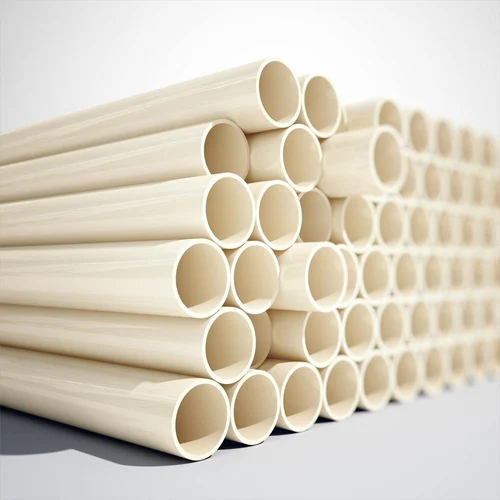
The first step to ensuring you use the correct adhesive is to correctly identify your pipe and fittings material. PVC is generally white, whereas CPVC is usually light gray or cream colored, and CPVC CTS is a tanish/yellow color. If you are still not certain after looking at the color of the pipes, PVC, CPVC, and CPVC CTS pipes all come with the technical specifications printed on them.

Is There a Specific Type of Glue to Use?
- The glue used to connect PVC piping and fittings is highly specific. It doesn’t work like ordinary adhesive, and is better thought of as a chemical solvent. It works by melting the surface of the PVC, then quickly hardening to fuse attached pieces with an airtight, seamless, leak proof bond. The results are similar to welded metal.
- It’s important to pick the proper solvent for PVC pipe. Carefully read product labels and avoid universal solvent cements.
- For a reliable seal, you’ll need to use a primer with your PVC solvent. Purple primer is usually required by building codes. The bright color allows inspectors to see that all fittings have been primed.

Gluing PVC drainage Pipe Together: A Step-by-Step Process
1. Measure and Cut the PVC drainage Pipe(s)
Gluing PVC drainage pipe together starts with knowing how to cut PVC drainage pipe. You’ll want to ensure that each length of pipe sits fully in its fittings. For accurate sizing, measure the distance between shoulders on the fittings at each end of your pipe. Transfer that measurement to the PVC pipe with a felt-tip marker.

With your PVC drainage pipe on a level surface, use your hacksaw to make a straight, square cut. Square pipe ends fit snugly into fittings with plenty of contact area for solvent cement to work properly. They also make for an even interior surface that water can flow through smoothly.

Once your PVC pipes are cut, use 80-grit sandpaper to scrape the inside and outside of each cut smooth. This removes burrs that would otherwise snag debris such as hair and cause clogs.

2. Test How the PVC drainage Pipe(s) Fit Together (Without Glue)
Plumbing needs to fit together perfectly to ensure a leak-free seal, so take time to dry-fit all connections before gluing anything together. Lay out all pieces to make sure that they fit together nicely and are cut to the correct length.

PVC glue dries fast, and you’ll only have a few seconds to put the pipes together when it’s applied. Before you take apart your dry-fit assembly, make reference marks and number each connection so you can quickly put everything back in place when it’s time.

3. Prime the Ends of the Pipes
Primer softens and cleans the plastic so that the glue can work properly. You’ll need to use purple primer so that it’s visible for inspectors. Shake the can of primer for about 30 seconds to mix the solution. Open it and wipe any excess primer on the lid so it doesn’t drip.

Take your first fitting and spread primer over the outside of the pipe’s end. Spread enough so the primer will overlap the fitting collar the pipe is going into. Spread the same amount of primer on the inside of the pipe fitting collar. Give the PVC pipe and fitting about 10 seconds to cure before applying any glue.

4. Apply Glue Over the Primer
Next, you’ll apply glue in the same way you applied the primer. Apply an even amount over each surface. Once your glue is applied, you’ll only have a few seconds for the next step before it starts to dry and cure.

5. Push the PVC drainage Pipes Together and Let the Cement Set
Immediately insert your PVC pipe into the matching fitting and rotate them a quarter turn to line up your reference marks. Twisting the fitting slightly helps spread the cement evenly for a solid joint connection. Press and hold the pipe and fitting together for about 15 seconds so the glue doesn’t push the PVC pipe out of the fitting.
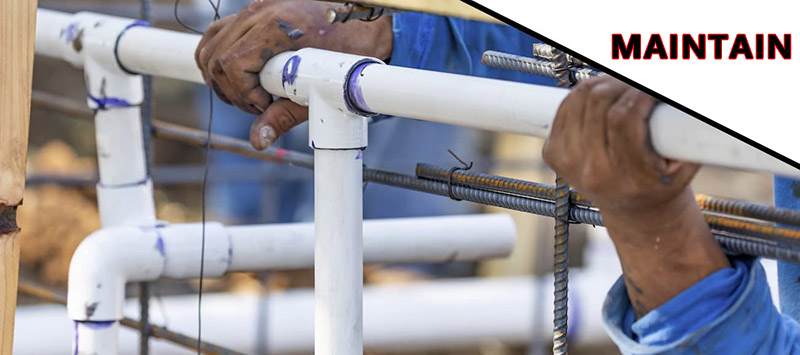
Notice:Consult your glue’s manufacturer instructions for information about how long you need to wait before handling the connected PVC. Repeat these steps to attach any remaining PVC pipe connections for your project.
Conclusion
In general, in order to ensure the tightness, durability and effectiveness of PVC drain pipes, correct bonding is very important.
When installing PVC drain pipes, in order to ensure its tightness and long-term stability, it is recommended to use glue for bonding in accordance with the specifications. At the same time, during the installation process, it is also necessary to ensure that the drain pipe is installed in place and fully coated with glue in accordance with the standard requirements to avoid leakage problems caused by improper installation or insufficient use of glue.
If you would like to purchase or learn more about PVC pipes and fittings, please contact our team. The team will assist you and help you solve all your problems!
About SAM-UK
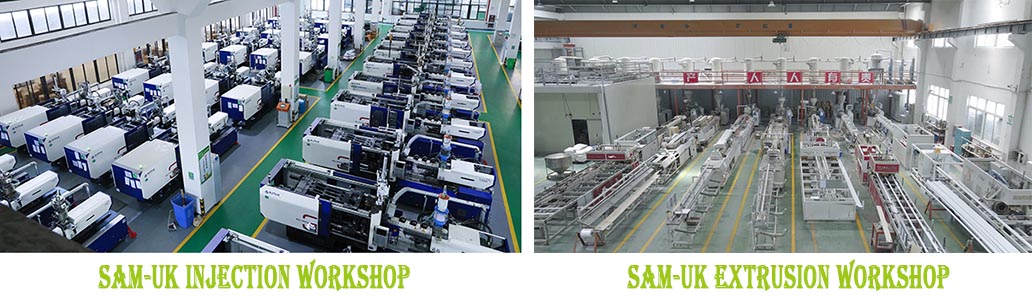
SAM-UK are a professional 18+ years manufacturer in producing vinyl building profile products and PVC , CPVC , PPH , PPR , PP pipes and pipe fittings, valves, taps and so on. We own the certificates of SGS\SONCAP\ISO9001\CE\NSF,support color /size customization. Welcome to consult for Catalog and Product. you can contact us at email [email protected]