Top 10 PVC Pipe Manufacturers in the World

Top 10 PVC Pipe Manufacturers in the World

Article Introduction

PVC Pipe and fittings are an essential component in any industry. These PVC pipe and fittings play a vital role in everyday life, in construction, in industries and in places we can’t see.The global plastics market is booming and PVC pipe and fittings market size was USD 19,456 million in 2023, growing at a CAGR of 3.7% from 2024 to 2032. Which makes it essential to know who are the top 10 pvc pipe manufacturers in the world.

As statistic show, most of plastics manufacturing companies in the world mainly come from these main countries, China, United State and India. Especially plastics manufacturers in China, play a very important role in PVC pipe and fittings manufacturing and exporting, as one of the largest PVC pipe and fittings manufacturers in the world.
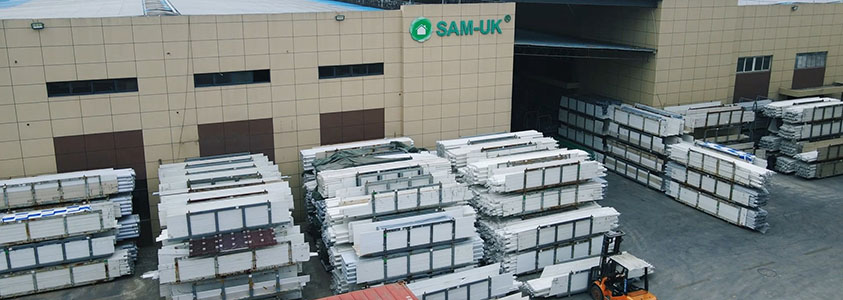
UPVC pipes manufacturers


Famous brands in the PVC pipes industry

When talking about top 10 pvc pipes in world, below plastics companies and brand are famous in the plastics industry.

  1. The Federal Group USA
  2. SAM-UK
  3. Seelye Acquisitions, Inc.
  4. Plastic Molding Technology
  5. Jamestown Plastics
  6. NewAge Industries, Inc.
  7. WS Hampshire, Inc.
  8. Calpex Plastics, Inc.
  9. Plastic Design, Inc.
  10. Inline Plastics, Inc.

Brand


The top PVC pipe manufacturers in China

China’s PVC industry boasts some of the world’s largest and most prominent manufacturers. The top 10 PVC pipe manufacturers in China provide a diverse range of products, such as pipes, fittings, films, and foam boards.

Top PVC Pipe Manufacturers in the China

  1. China Lesso Group Holdings Limited
  2. Taizhou Zhuoxin Plastics Co.,Ltd
  3. Hebei Bosoar Pipe Corporation Limited
  4. Pipelife Austria GmbH & Corporation KG
  5. Zhejiang Jinyu Fengye Pipe Industry Co. Ltd.
  6. ERA Co,Ltd.
  7. Vasen

UPVC Pipe Manufacturing


What Is PVC Pipe

PVC pipe, made of polyvinyl chloride resin, is also known as rigid PVC. This material boasts excellent water, weather, corrosion, and flame resistance, making it an economically advantageous alternative to metal pipes. Its lightweight and easy installation contribute to its widespread use.
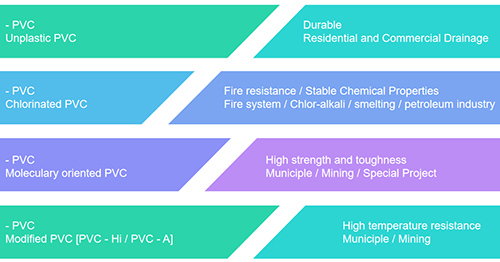
Characteristics of PVC plumbing pipes


What is the full meaning of PVC Pipe ?

1. The full meaning of PVC Pipe breaks down as follows:

  • PVC: Stands for Polyvinyl Chloride.
  • Poly-: Means “many”.
  • Vinyl: Refers to a specific chemical group (-CH=CH₂), derived from ethylene in this context.
  • Chloride: Indicates the material contains chlorine atoms (from reacting ethylene with chlorine).
  • Put simply: PVC is a synthetic plastic polymer made by polymerizing vinyl chloride monomers. It’s a thermoplastic, meaning it becomes moldable when heated and solidifies upon cooling.
  • Pipe: Refers to a hollow cylinder or tube, typically used to convey fluids (liquids, gases) or sometimes to protect electrical wiring.

Therefore, the full meaning is: Polyvinyl Chloride Pipe.

UPVC material

2. Key Characteristics of PVC Pipes:

  • Durable & Long-Lasting: Resistant to corrosion, rot, chemicals, and abrasion.
  • Lightweight: Much easier to handle and install than metal pipes.
  • Cost-Effective: Generally cheaper than metal alternatives like copper or iron.
  • Smooth Interior: Reduces friction, allowing for good water flow and minimizing scale buildup.
  • Low Thermal Conductivity: Doesn’t transfer heat or cold as readily as metal, reducing condensation and energy loss.
  • Waterproof & Non-conductive: Naturally resistant to water and electricity (important for electrical conduit).
  • Easy to Install: Can be easily cut with simple tools and joined using solvent cement (creating a strong, permanent bond) or threaded fittings.

Uniqueness of UPVC Pipes

3. PVC Pipe Common Applications:

  • Potable (Drinking) Water Supply Lines
  • Drain, Waste, and Vent (DWV) Systems
  • Sewer and Drainage Lines
  • Irrigation Systems
  • Electrical Conduit
  • Plumbing Fixtures
  • Industrial Process Piping

Application scenarios of PVC pipe fittings

👉 Essentially, a PVC Pipe is a tube made from the versatile plastic Polyvinyl Chloride, widely used for transporting fluids and protecting wires due to its excellent combination of properties.


Why is PVC not allowed in homes?

PVC (Polyvinyl Chloride) pipe restrictions in residential settings stem from documented health, environmental, and safety risks. While not universally banned, many regions limit or prohibit specific PVC applications—especially for drinking water and electrical systems—due to the following key concerns:

⚠️ 1. Health Risks from Chemical Leaching

  • Heavy Metal Contamination: Traditional PVC pipes often contain lead-based stabilizers (e.g., lead salts) to enhance durability. Over time, lead can leach into drinking water, posing risks of neurological damage, developmental issues in children, and organ toxicity.
  • Toxic Additives: PVC may include phthalates (e.g., DEHP/DOP) as plasticizers, which migrate into water. These chemicals are endocrine disruptors linked to reproductive harm, reduced immunity, and cancer.
  • VCM Monomer Residues: Poorly manufactured PVC can retain vinyl chloride monomer (VCM), a carcinogen that contaminates water and affects liver/nervous system function.
  • PVC-Pipes-in-Drinking-Water-Systems

🔥 2. Fire Hazards and Toxic Emissions

  • Flammability: While pure PVC is self-extinguishing, additives like plasticizers can increase flammability. Inferior PVC electrical conduits may ignite easily and propagate fires.
  • Poisonous Fumes: When burned, PVC releases hydrogen chloride gas (causing respiratory damage) and dioxins (persistent carcinogens). This is critical in electrical fires where toxic smoke endangers occupants.
  • The hazards of burning PVC pipes

♻️ 3. Environmental and Long-Term Safety Issues

  • Disposal Toxicity: Incinerating PVC waste generates dioxins that contaminate air and soil. Recycling is challenging due to mixed additives, leading to landfill accumulation.
  • Material Degradation: PVC pipes become brittle under UV exposure or temperature swings (e.g., above 40°C), increasing rupture risks. They are also unsuitable for hot-water systems.
  • pvc-pipe-recycling

💎 Key Insight: Context Matters

Not all PVC uses are forbidden. Drainage pipes and V0-rated electrical conduits remain acceptable where leaching/fire risks are minimal 39. However, for drinking water and high-safety electrical systems, alternatives are strongly favored due to PVC’s inherent trade-offs between cost and safety.

For homeowners, selecting certified non-toxic pipes (e.g., lead-free PVC-U, PPR, or stainless steel) and V0-grade electrical conduits mitigates these risks 4610. Always verify local regulations and manufacturer certifications when using PVC in homes.


What companies make PVC pipe & fittings

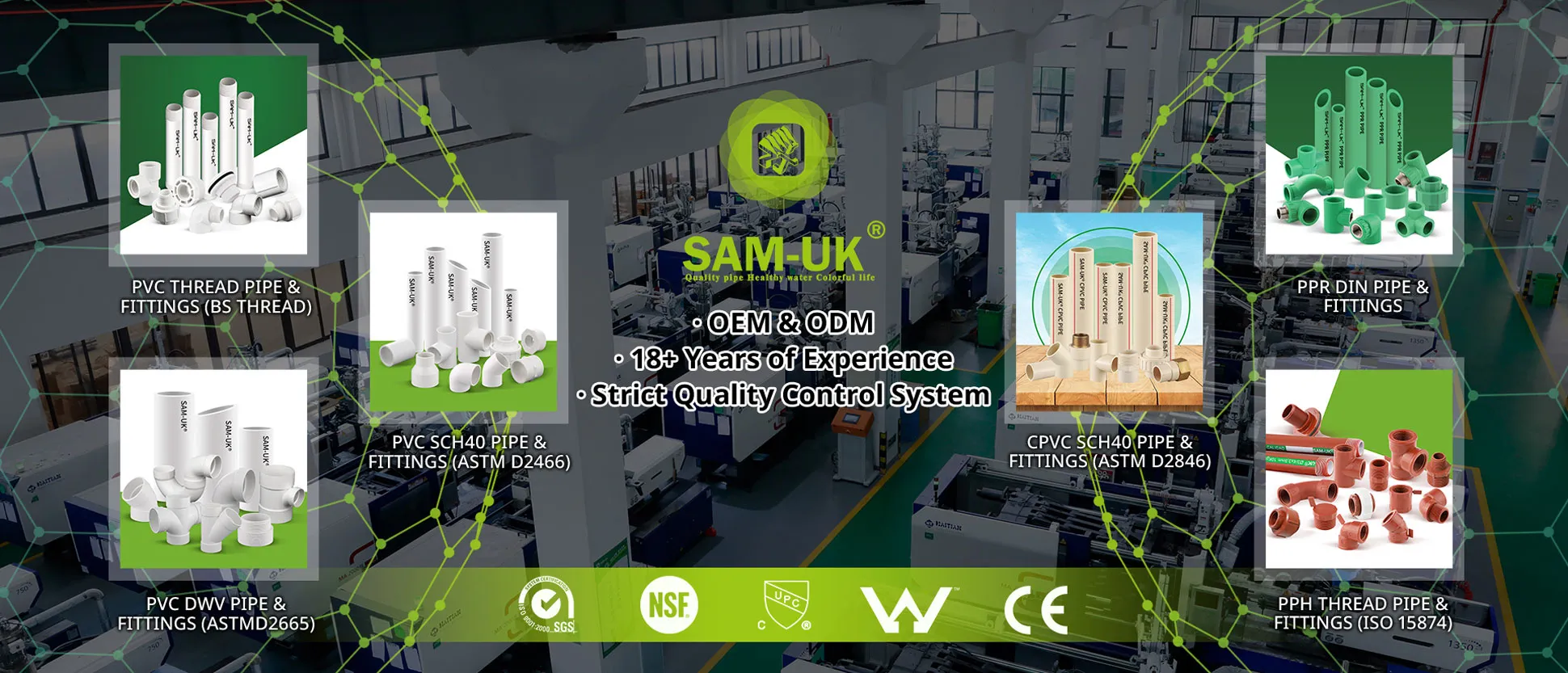
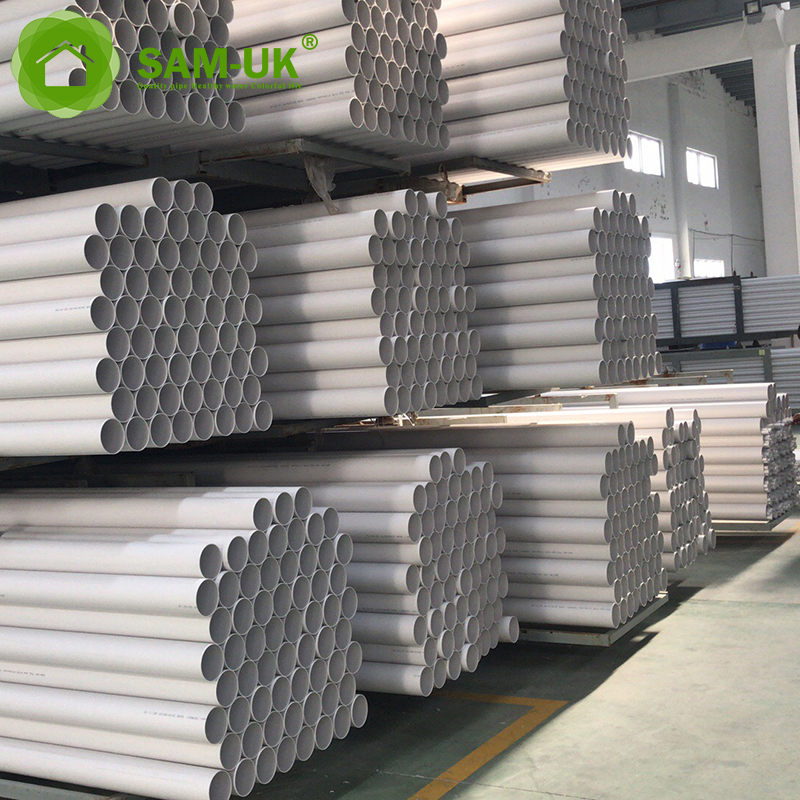
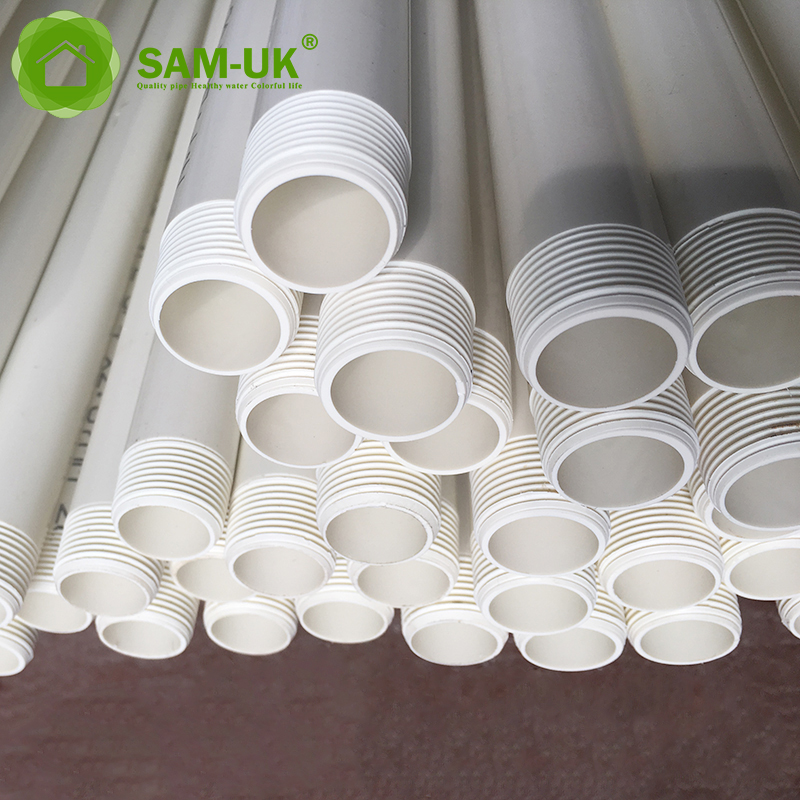
Actually it’s not hard to find PVC pipe and fittings manufacturer in China, there are many PVC pipe&fittings manufacturer in China, even some of the largest plastics manufacturers in the world, especially Taizhou Zhejiang province, where our factory located, the town of plastics manufacturing both small and large PVC pipe&fittings. You can find any kind of PVC pipe and fittings here. SAM-UK as one of the China pipes&fittings manufactures, we manufacture and export mainly different types of PVC pipe and fittings like NBR 5648 standardSCH40 ASTM D2466 standardBS 4346 standardASTM D2655 standardASTMD 2846 standardISO 15874 standardPPR standard etc.

Top 10 PVC Pipe Manufacturers in the World 11


About SAM-UK

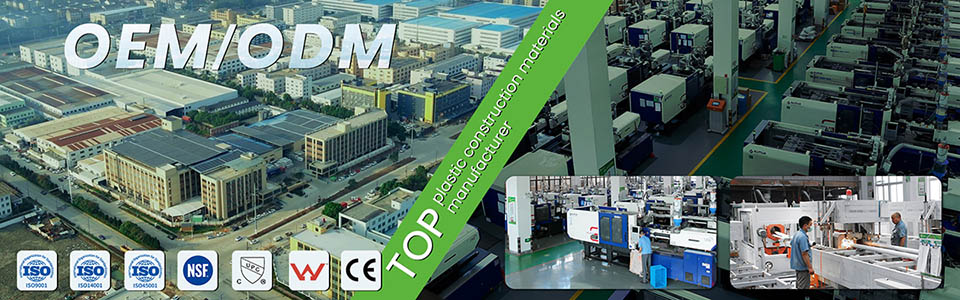
SAM-UK are a professional 18+ years manufacturer in producing vinyl building profile products and PVC,CPVC, PPH,PPR,PP pipes and pipe fittings, valves, taps and so on. We own the certificates of SGS\SONCAP\ISO9001\CE\NSF,support color /size customization. Welcome to consult for Catalog and Product. you can contact us at email [email protected]

upvc pipe and fittings manufacturers

Related Products