Introduction
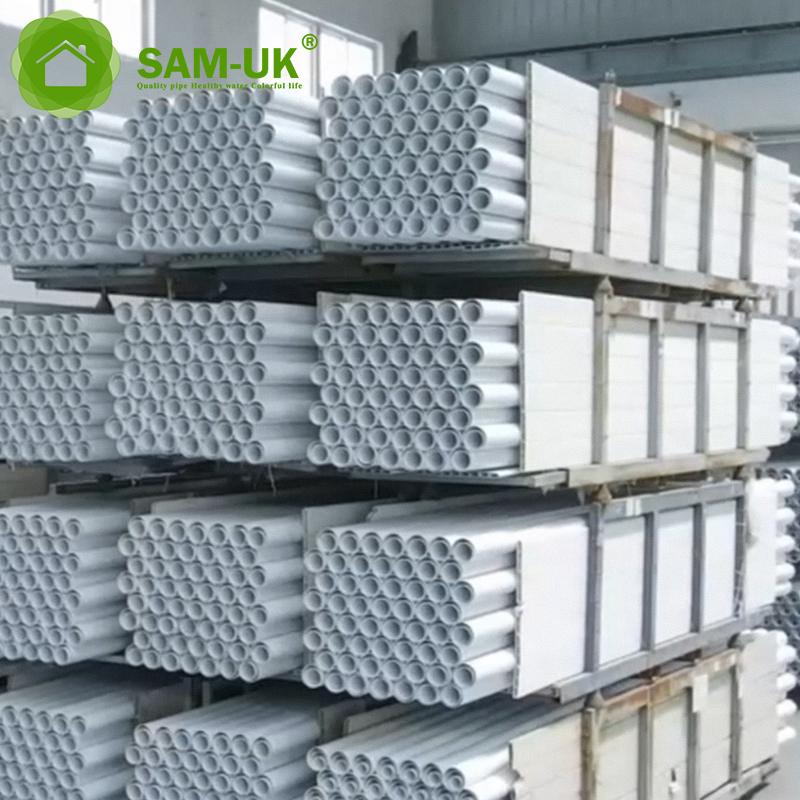
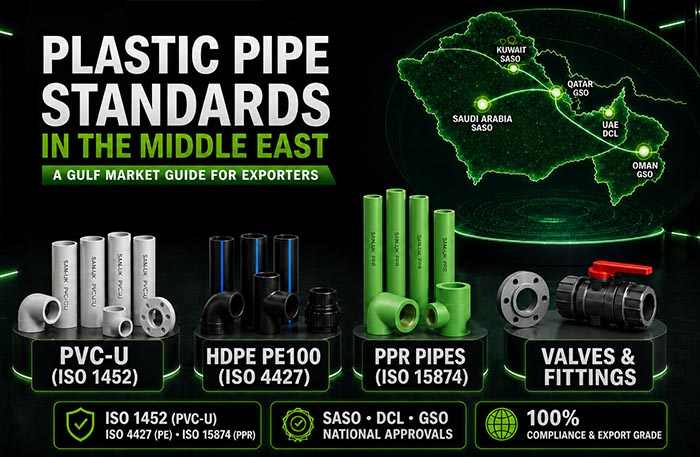
The Gulf states build with the same ISO pipe standards most of the world uses — ISO 1452 for PVC-U, ISO 4427 for PE, ISO 15874 for PPR — and then layer national approval schemes on top that catch exporters off guard. Here is the working map of Middle East plastic pipe standards and the certifications each country actually enforces, drawn from the compliance reality we deal with shipping into the region.
→ Click to view the high-resolution diagram ←
Why the Gulf Market Deserves a Closer Look
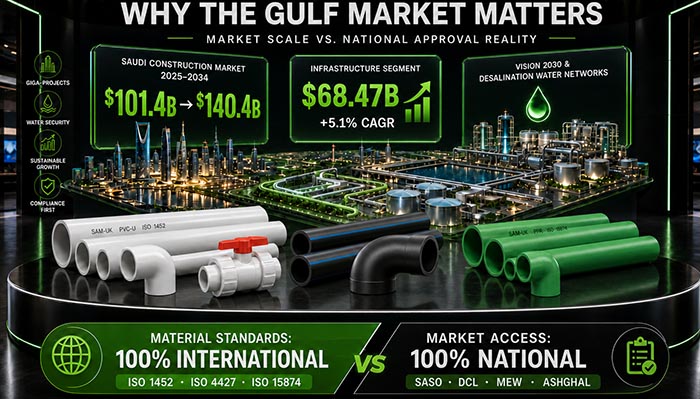
Scale first, because the numbers justify the paperwork. Saudi Arabia’s construction market was valued at USD 101.4 billion in 2025 and is forecast to reach USD 140.4 billion by 2034, while the kingdom’s infrastructure construction segment alone was estimated at USD 68.47 billion in 2026, growing at roughly 5.1% annually. Vision 2030 giga-projects, mass housing programs and desalination-driven water networks keep the pipe specifiers busy. The UAE runs a close second with its own construction cycle, and Qatar’s post-World Cup phase still spends steadily on buildings and utilities.
Here is the catch that shapes this whole guide: in the Gulf, material standards are international but market access is national. A pipe that sails through Saudi customs can stall in Dubai or Kuwait, not because the product is worse, but because the approval is different. Understanding that split is the entire game.
→ Click to view the high-resolution diagram ←
The Standards Architecture: ISO at the Core
→ Click to view the high-resolution diagram ←
Gulf national standards bodies adopt ISO standards nearly verbatim — Saudi Arabia formally adopts ISO 1452 as SASO ISO 1452, and local manufacturers advertise production to exactly that reference. The GCC Standardization Organization (GSO) harmonizes technical regulation across the bloc, but enforcement remains in each member state’s hands. A useful way to read the landscape:
| Material / product | Governing ISO / EN standard | Where it dominates | National approvals to expect |
|---|---|---|---|
| PVC-U pressure pipe (water supply) | ISO 1452 (adopted as SASO ISO 1452 in KSA) | Municipal water mains, irrigation, cold-water networks | SASO SABER PCoC/SCoC; UAE ECAS; Dubai Municipality |
| PE pipe (water, gas, sewers) | ISO 4427 (water), ISO 4437 (gas); EN 12201 legacy | Pressure mains, trenchless, desalination networks | Same national schemes; utility-specific approvals common |
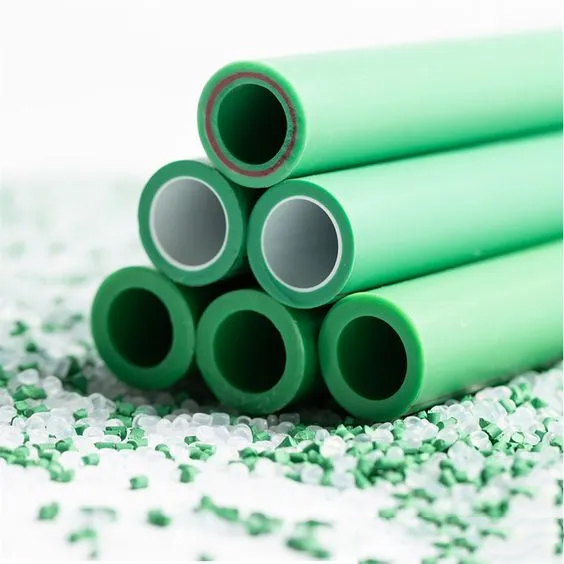
| PPR pipe & fittings (hot/cold building) | ISO 15874, with DIN 8077/8078 heritage | Residential and commercial plumbing — the Gulf default | SABER, ECAS, Dubai Municipality, project approvals |
| uPVC drainage & soil | EN 1329 family; ISO 1452 drainage references | Above/below-ground drainage in buildings | Dubai Municipality “plastic piping system” certification; others per state |
Notice the legacy layer underneath. British-standard influence still shows up in older UAE and Qatari specifications, and DIN references survive wherever German consultants or PPR heritage run deep. New tenders increasingly cite ISO or EN directly, but an exporter carrying only ASTM test reports will face translation questions — the Gulf reviewer wants the ISO/EN mapping on paper.
Country-by-Country Certification Requirements
Saudi Arabia: SASO, SABER and the Building-Materials Regulation
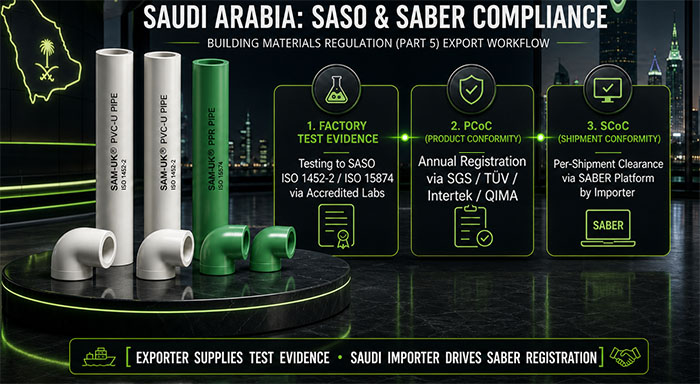
Saudi compliance runs through the SASO SALEEM program, executed on the SABER electronic platform. The importer registers the product in SABER and obtains a Product Certificate of Conformity (PCoC); every shipment then needs a Shipment Certificate of Conformity (SCoC) issued by a SASO-approved certification body such as SGS, TÜV, Intertek or QIMA. Pipes for water, electricity and gas networks sit inside SASO’s technical regulations for building materials — the pipes-and-accessories volume is commonly referenced as Part 5 of that regulation family — so you test to the SASO-adopted standard, e.g. SASO ISO 1452-2 for uPVC water pipe. One practical detail most exporters learn late: the SABER platform is only accessible to the Saudi importer, so your client drives the registration while you supply the test evidence.
→ Click to view the high-resolution diagram ←
United Arab Emirates: MoIAT/ECAS plus Dubai Municipality
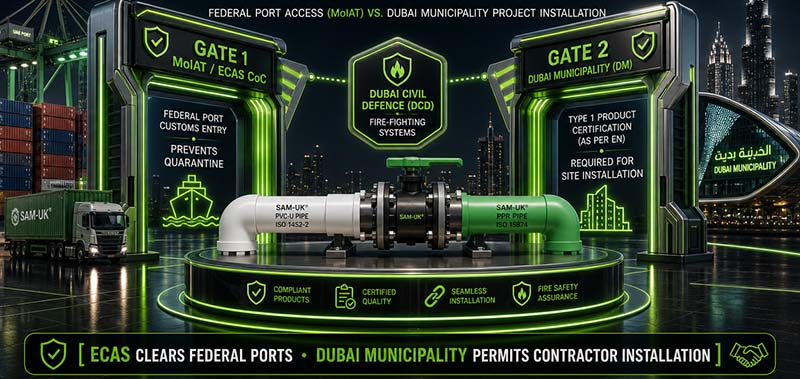
The UAE folded ESMA into the Ministry of Industry and Advanced Technology (MoIAT), which runs the Emirates Conformity Assessment Scheme (ECAS). Regulated products need an ECAS Certificate of Conformity issued through notified bodies, and consignments without it can be held in quarantine at the port. But Dubai adds a second gate that exporters routinely forget: Dubai Municipality runs its own construction-product certification — Type 1 product certification — and for plastic piping systems it assesses “as per EN” references. Sell into Dubai projects without that registration and the contractor cannot legally install your pipe. Fire-protection piping adds yet another layer, with Dubai Civil Defence approvals governing sprinkler and fire-fighting systems separately from water pipe.
→ Click to view the high-resolution diagram ←
Qatar: QS Standards and Project-Level Enforcement
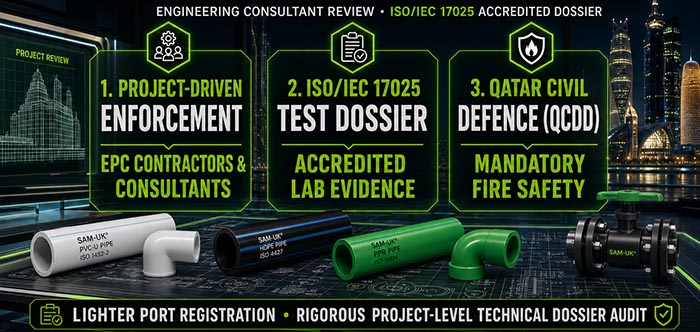
Qatar Standards (QS) adopts ISO and GSO norms, and enforcement is largely project-driven rather than port-driven. The real gatekeepers are the big contractors and consultants, who demand ISO/IEC 17025 test reports mapped to the cited standard, plus Qatar Civil Defence approvals for fire-fighting pipe systems. Registration paperwork is lighter than Saudi’s, but the technical dossier expectations are not.
→ Click to view the high-resolution diagram ←
Kuwait: KUCAS for Every Regulated Shipment
Kuwait runs the Kuwait Conformity Assurance Scheme (KUCAS). Regulated products need a Technical Evaluation Report (TER) covering the product itself, and each consignment clears customs with a Technical Inspection Report (TIR) tied to it — issued through approved bodies like Intertek, TÜV and SGS. Building materials appear on Kuwait’s regulated lists by HS code, so check your fractions before assuming a shipment sails through.
→ Click to view the high-resolution diagram ←
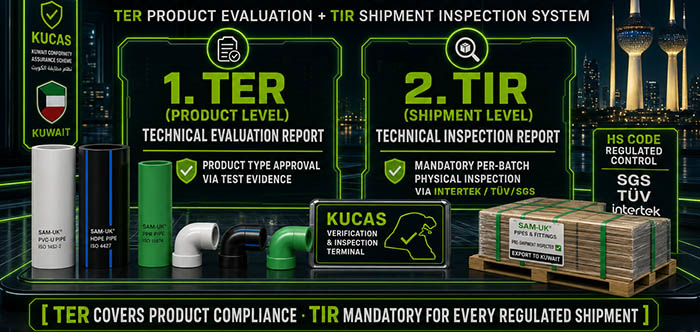
Oman and Bahrain
Both tend to follow the GCC/GSO framework, and in practice they frequently accept valid test certificates from recognized ISO/IEC 17025 laboratories plus supplier declarations. Confirm with your in-country importer on each order — requirements here evolve faster than the marketing brochures suggest.
→ Click to view the high-resolution diagram ←
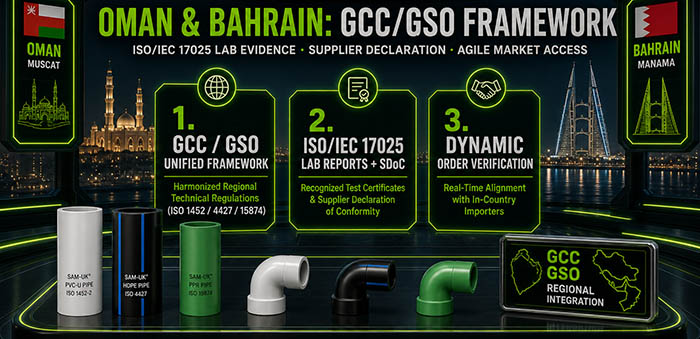
Why PPR Rules Gulf Building Plumbing
Walk a plumbing floor in any Doha or Riyadh tower and you will see PPR, not CPVC or copper. The reasons are practical, not fashionable. PPR handles continuous hot-water service temperatures up to around 70°C with pressure derating curves that specifiers understand, and its heat-fusion joints create a monolithic, leak-free system — no solvent-cement joints baking in 50°C roof spaces, no threaded connections loosening under thermal cycling. In a climate where a failed joint means cutting into finished gypsum, that reliability argument wins.
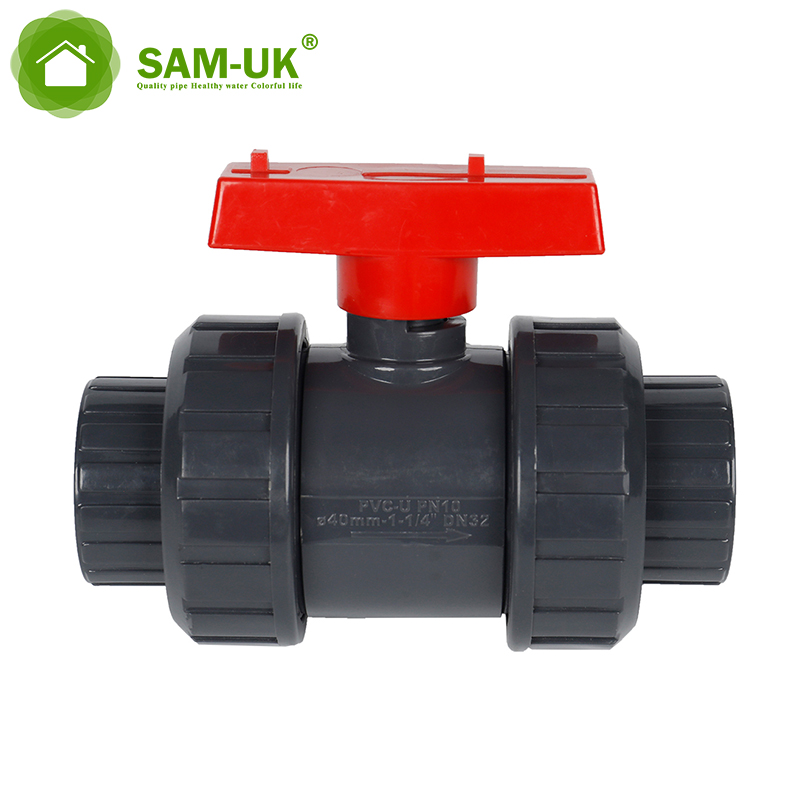
The market data agrees. One estimate put the Saudi PPR pipes market near USD 71 million in 2025 with steady growth projected, and industry reporting shows Saudi PPR consumption around 24,480 tonnes in 2024. Regional standardization on metric PPR to ISO 15874 — with the DIN 8077/8078 heritage still visible in spec sheets — means an exporter’s PPR program transfers across Saudi, UAE and Qatari projects with minimal re-engineering. That is precisely why SAM-UK runs its PPR pipe range to ISO 15874 and keeps fittings and valves in the same metric system: one certified family, several Gulf markets.
→ Click to view the high-resolution diagram ←
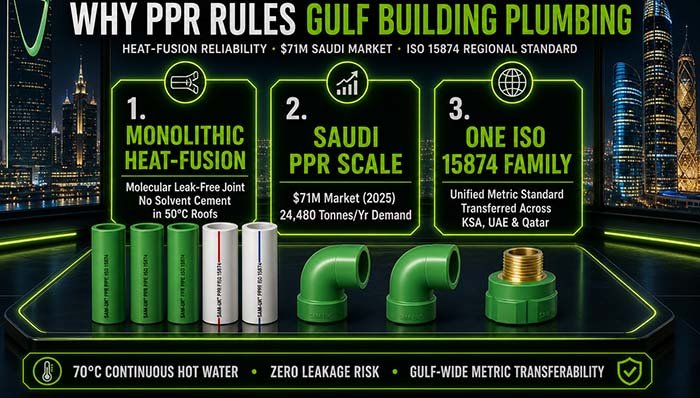
The Exporter’s Compliance Checklist
Use this before quoting any Gulf tender. It mirrors the questions project buyers put to us at SAM-UK when they qualify a new pipe source.
- Confirm regulated status per country. Saudi SABER, UAE ECAS, Kuwait KUCAS and Dubai Municipality are separate schemes. Never assume one GCC approval covers another state.
- Work through an in-country registrant. SABER is importer-side; ECAS and Dubai Municipality registration run through a local entity or authorized representative. Your exporter role is supplying evidence, not holding the registration.
- Test to the standard each tender cites. ISO 1452, ISO 4427, ISO 15874 or EN 1329 — with reports from an ISO/IEC 17025 laboratory and batch traceability records. Map your existing test data to the ISO/EN reference before the auditor asks.
- Plan for third-party inspection. Gulf contractors routinely require SGS, Bureau Veritas, TÜV or QIMA inspection and batch testing on project orders. Budget the lead time — inspection slots book out.
- Get marking and documentation bilingual. Expect Arabic/English data sheets and print lines showing the standard, size, pressure class and batch. Consumer-facing labels in Saudi must carry Arabic; project technical documents are typically bilingual as a matter of course.
- Be ready for a factory audit. Tender committees ask where the pipe is made and who owns the tooling. The evidence that works: quality system certification (ISO 9001), product certifications that travel (CE, NSF, UPC, Watermark), in-house mold capability, and honest capacity numbers. SAM-UK answers with a 1995 founding date, its own mold workshop, around 50,000 tonnes/year capacity and 30-day lead times on standard programs — the kind of concrete detail that survives a buyer’s due diligence.
→ Click to view the high-resolution diagram ←
Common Mistakes Exporters Make
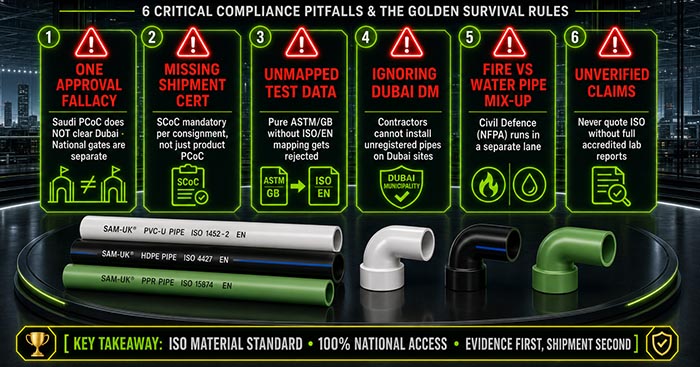
- One approval, seven countries. A Saudi PCoC does not clear Dubai, and a Dubai Municipality registration does not satisfy SABER.
- Shipping without the shipment certificate. SABER requires an SCoC for every consignment, not just a product certificate on file.
- Submitting unmapped test reports. Chinese GB-standard or pure ASTM data without an ISO/EN mapping gets bounced by consultants and certification bodies.
- Ignoring Dubai Municipality when selling to Dubai. Contractors literally cannot install unregistered piping in Dubai projects.
- Confusing fire-protection piping with water pipe. Civil Defence approvals (NFPA-based) run in a separate lane from potable-water approvals in Qatar, Dubai and Saudi.
- Quoting compliance you cannot evidence. “Meets ISO 1452” on a data sheet without a test report behind it is how shipments end up in bonded storage.
→ Click to view the high-resolution diagram ←
Frequently Asked Questions
Do I need SASO SABER certification for every pipe shipment to Saudi Arabia?
Yes, for regulated pipe products. The Saudi importer registers the product on the SABER platform to obtain a Product Certificate of Conformity, and every shipment requires a Shipment Certificate of Conformity from a SASO-approved body. Pipes for water, electricity and gas networks fall under SASO’s building-materials technical regulation.
What is the difference between ESMA/ECAS and Dubai Municipality certification in the UAE?
ESMA has been integrated into the Ministry of Industry and Advanced Technology (MoIAT), which runs the national ECAS scheme for regulated products. Dubai Municipality runs a separate construction-product certification — its Type 1 product certification covers plastic piping systems assessed against EN references — and Dubai projects require it independently of ECAS.
Which standard do Gulf water projects use for PVC-U pressure pipe?
ISO 1452 is the reference across the Gulf; Saudi Arabia adopts it as SASO ISO 1452 and local manufacturers certify to it. uPVC drainage pipe is commonly specified to the EN 1329 family, with legacy British-standard references still appearing in older specifications.
Why is PPR preferred over CPVC in Gulf building plumbing?
PPR handles sustained hot-water temperatures up to about 70°C, its heat-fusion joints form a monolithic leak-free system that tolerates extreme ambient heat, and the region’s specifiers standardized on metric PPR to ISO 15874 years ago — DIN heritage included. Market reports show steady PPR consumption growth in Saudi Arabia in particular.
Will my ISO/IEC 17025 test report from China be accepted?
Often yes as core evidence for SABER, ECAS or Kuwait KUCAS applications, provided the laboratory is recognized and the report is mapped to the cited ISO/EN standard. Local batch testing and third-party inspection are still commonly required on project orders, so confirm the acceptance criteria with your certification body or in-country partner before shipping.
How long does Gulf certification take for a new product line?
With valid test reports in hand, a SABER PCoC typically takes weeks rather than months; Dubai Municipality registration and ECAS applications vary by product category and documentation quality. First-time exporters should budget one to three months end-to-end — these are indicative ranges, so confirm current processing times with the issuing bodies.
About SAM-UK
SAM-UK (Taizhou Zhuoxin Plastics Co., Ltd.) has manufactured plastic pipe and fittings since 1995 — PVC , CPVC , PPH , PPR and PP systems, plus valves and taps. Our certifications: ISO 9001, NSF, UPC, ETL, CE and Watermark. We support color and size customization, and we supply ISO/IEC 17025 test reports to support your local market registration — in the Gulf, that registration is held by the importer or project entity, and we provide the evidence for it. Download the catalog or contact our team at [email protected].