Article Introduction
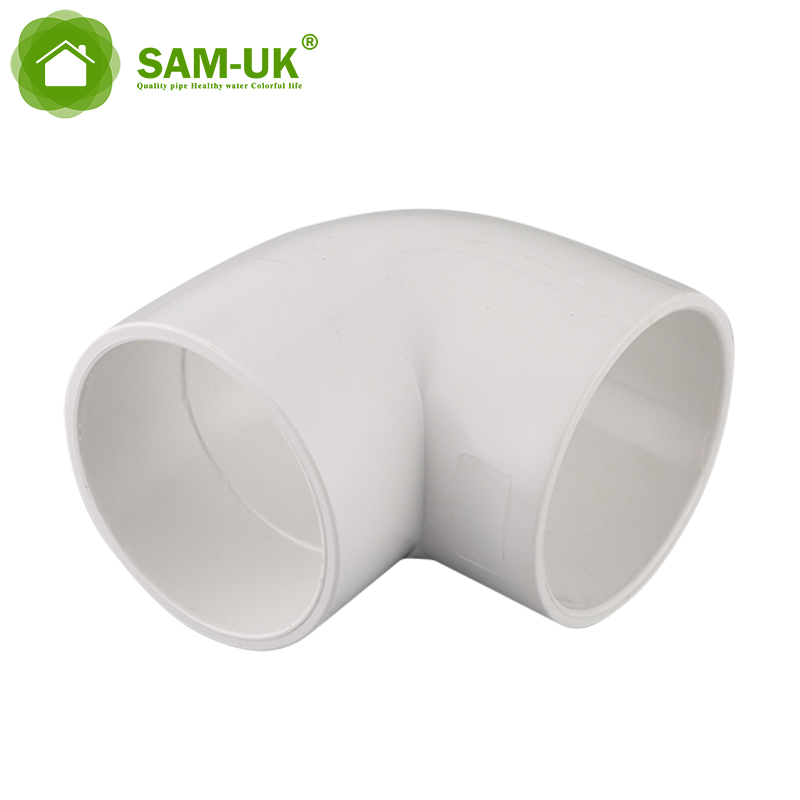
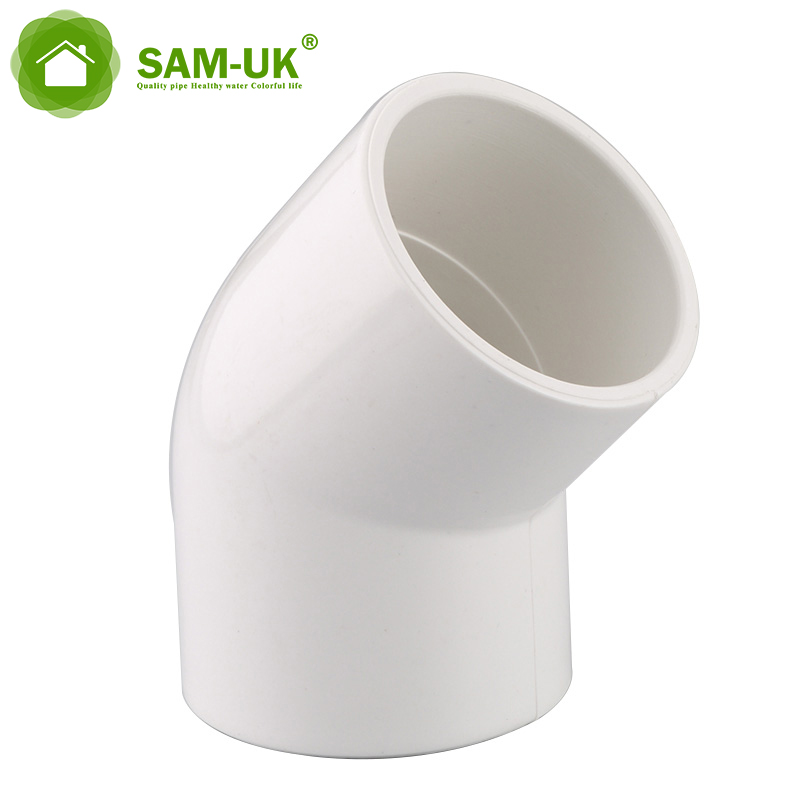
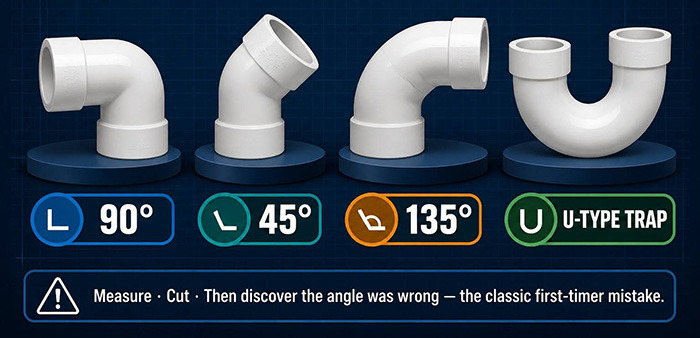
An elbow that doesn’t fit the layout is the classic first-timer mistake in PVC plumbing: you measure, cut, and then discover the angle is wrong. PVC elbow fittings come in standard angles — 90°, 45°, and 135° — plus U-type and S-type trap bends, and each serves a different purpose. This guide explains the angle options, the connection types, and how to fit an elbow correctly.


What are the PVC pipe elbow fittings angle degrees
1. Standard Angles
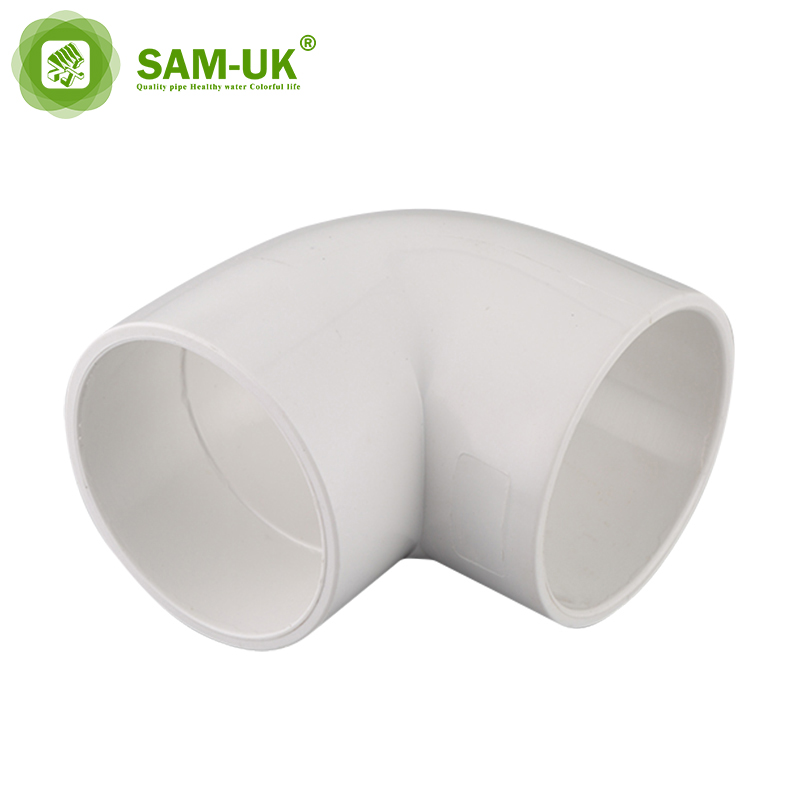
PVC elbow fittings are manufactured in a small set of standard angles: 90° and 45° are the everyday workhorses; 135° exists for special layouts but is uncommon. All are made from rigid PVC-U, so they match the pipe’s stiffness and pressure class. 90° and 45° elbows are used for drainage direction changes — the 90° turn fits tight spaces, while the 45° turn is smoother and kinder to flow.

2. Trap Bends: U-Type, S-Type, and P-Type
U-type, S-type, and P-type bends are not angles — they’re water traps: fittings that hold a standing water seal to block sewer gas. In practice: the kitchen sink drains through an S-type trap, urinals through a P-type, and washbasins often use a U-type. Any of them gives reliable odour separation as long as the water level in the bend is maintained.

3. Choosing Between 90° and 45°
Field experience settles this quickly: the 90° elbow takes little space but creates more flow impact; the 45° elbow needs more room but keeps flow smooth. Where space allows, use two 45° elbows instead of one 90° to form a gentle arc — drainage runs better and blocks less over time.
One thing worth checking on any remodel: the drainage fall (slope) to the fixture must be sufficient. Too little fall means slow drainage, and slow drainage eventually means blockages — the elbow itself isn’t the problem.

In addition, it is necessary to pay attention to the project of changing the pipe in the house. The drop of the water in the pool must be enough, otherwise it is easy to cause the slow drainage of the toilet, and it is easy to plug the fault for a long time.
How to connect elbow to PVC pipe?
Connecting an elbow to a PVC pipe is a common step in plumbing systems to change the direction of flow. Here’s a simple step-by-step guide to do it correctly:
🔧 Materials You’ll Need:
- PVC pipe
- PVC elbow (usually 90° or 45°)
- PVC primer (optional but recommended)
- PVC cement (solvent glue)
- Pipe cutter or hacksaw
- Rag or sandpaper

🧰 Step-by-Step Instructions:
1. Measure and Cut the Pipe
- Measure the length of PVC pipe you need.
- Cut it squarely using a PVC cutter or fine-tooth saw.
- Remove burrs or rough edges with sandpaper or a utility knife.

2. Dry Fit the Pieces
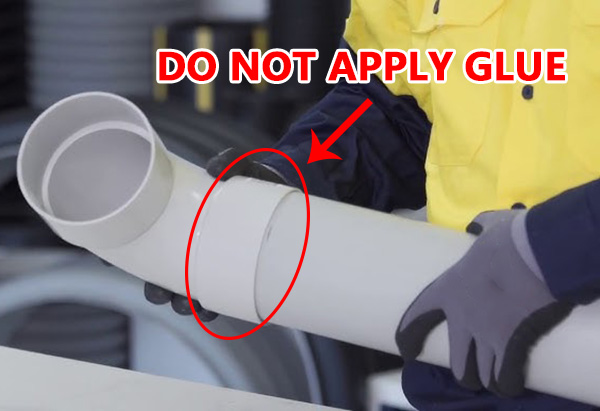
- Insert the PVC pipe into the elbow without glue to make sure it fits.
- Ensure the angle is correct for your layout.
3. Clean the Joints
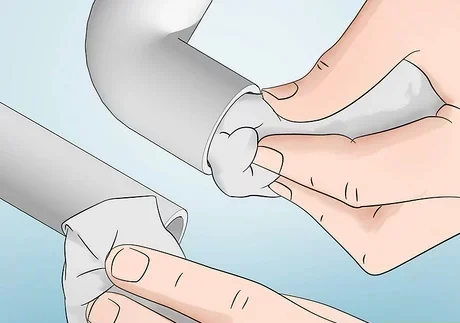
- Wipe the pipe and elbow sockets clean with a rag.
- For best results, use PVC primer on both the pipe end and the inside of the elbow fitting.
4. Apply PVC Cement
- Apply a thin, even layer of PVC cement to both the pipe and the elbow.
- Be quick—PVC cement sets fast!

5. Connect the Pieces
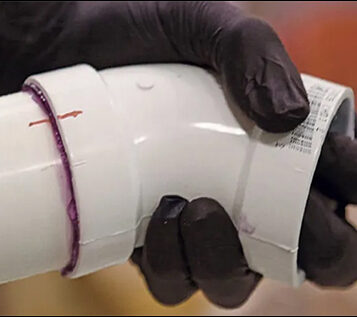
- Immediately push the pipe into the elbow socket.
- Give it a quarter-turn twist to evenly spread the cement.
- Hold firmly for 15–30 seconds until it sets.
6. Let It Cure
- The joint sets in minutes, but full cure takes 24 hours at room temperature — keep the line dry and unpressurized overnight before testing or flow. On a cold site, allow even longer; solvent cement cures slower below 10°C.
✅ Pro Tips:
- Work in a well-ventilated area (PVC cement has strong fumes).
- Use primer especially for high-pressure or long-lasting installations.
- Don’t use excessive cement—drips inside the pipe can cause flow restriction.
- If you’re working on pressurized systems, consider using Schedule 40 or Schedule 80 fittings depending on pressure rating.
Characteristics of PVC pipe fittings
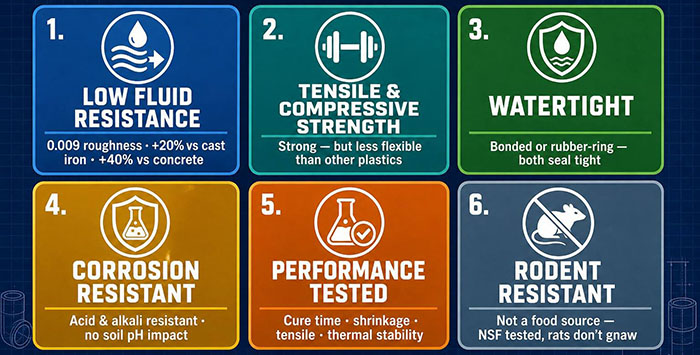
1. Fluid resistance is small: the tube wall of PVC-U pipe is very smooth, the resistance to the fluid is very small, its roughness coefficient is only 0.009, its water transport capacity can be increased by 20% than the same pipe diameter cast iron pipe, and 40% higher than that of the concrete pipe.
2. It has better tensile and compressive strength, but its flexibility is not as good as other plastic pipes.
3. Has good water tightness: the installation of PVC-U pipes, regardless of whether they are bonded or rubber rings, have good watertightness.
4. Corrosion resistance, good resistance character: PVC-U pipe has excellent acid resistance, alkali resistance, corrosion resistance, not affected by moisture and soil pH, without any antiseptic treatment in pipeline laying.
5. Performance test: curing time, shrinkage rate, splitting strength, tensile property, peel strength, thermal stability, application period, storage period, release of harmful substances.
6. Rodent Resistance: PVC-U pipe is not a food source, so it will not be gnawed by rodents. In tests conducted by the National Sanitation Foundation in Michigan, rats did not gnaw PVC-U pipes — one less failure mode to worry about in buried or crawl-space runs.
Standards to Specify
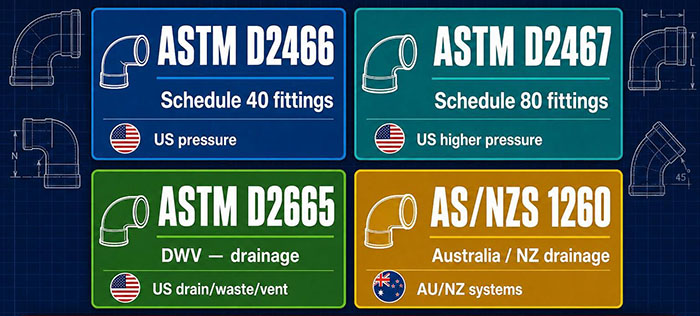
When ordering elbows for a project, put the standard on the RFQ: ASTM D2466 for Schedule 40 fittings, ASTM D2467 for Schedule 80, ASTM D2665 for DWV (drainage), and AS/NZS 1260 for Australia/New Zealand drainage systems. Fittings must match the pipe’s standard family — an ASTM elbow glued to an AS/NZS pipe is a joint failure waiting to happen.
summarize
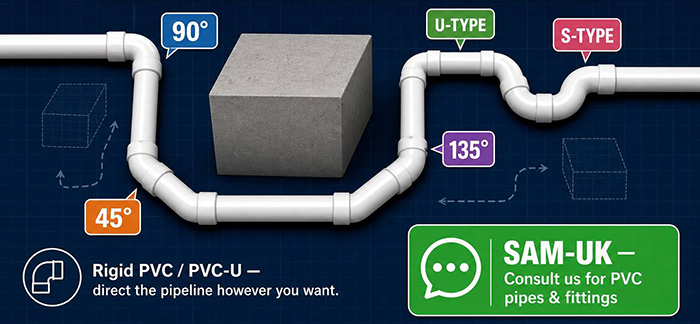
If you need your piping system to get turn or get around something in the way, you will need to bend your pipeline around with PVC elbows. The elbow angle of PVC pipe fittings has 90 degrees, 45 degrees, 135 degrees, U type and S type, and adopts rigid PVC or PVC-U pipes. so your pipeline can be directed however you want it.
If you want to learn more about related content knowledge, or have the intention to purchase PVC pipes and fittings, you can always consult us (SAM-UK) for more information!
Frequently Asked Questions
1. What angles do PVC elbows come in?
90° and 45° cover nearly every installation; 135° is available for special layouts but rarely stocked. All are rigid PVC-U, matching the pipe’s stiffness.
2. Is a 45° elbow better than a 90° elbow?
For flow, yes. A 45° elbow causes less pressure drop and less turbulence than a 90° bend. Where space allows, two 45° elbows make a gentler arc than a single 90° — standard practice in drainage work.
3. What’s the difference between a street elbow and a regular elbow?
A regular elbow has two sockets (both female); a street elbow has one socket and one spigot end, so it plugs directly into another fitting without a short pipe stub — handy in tight spaces.
4. Can I use the same elbow for pressure and drainage?
No — grade matters. Use Schedule 40/80 fittings (ASTM D2466/D2467) for pressure systems and DWV fittings (ASTM D2665) for drainage. They look similar; their wall thicknesses and pressure ratings do not match.
About SAM-UK
SAM-UK are a professional 20+ years manufacturer in producing vinyl building profile products and PVC , CPVC , PPH , PPR , PP pipes and pipe fittings, valves, taps and so on. See our certification records and product-specific scope. We support color /size customization. Welcome to consult for Catalog and Product. you can contact us at email [email protected]