Introduction
A factory audit isn’t a formality — it’s your only chance to verify what the brochure claims before you wire a six-figure deposit.
I’ve walked through more than 40 plastic pipe factories across 8 countries. Here’s the thing: the glossy catalogs all look the same. Same machines. Same ISO badges. Same claims about “world-class quality.” But the gap between what’s in the brochure and what’s on the factory floor? That gap has cost buyers millions in rejected shipments. You need a real audit — not a tour. Tours are for tourists. Audits are for people who intend to stay in business. Period.
Before You Arrive — The Document Review (4 Items)
Most buyers skip this and go straight to the factory floor. Big mistake. The document review sets your baseline. If a factory can’t produce clean paperwork before you arrive, they won’t produce clean pipes after you leave. Ask for these four documents at least 5 business days before your visit:
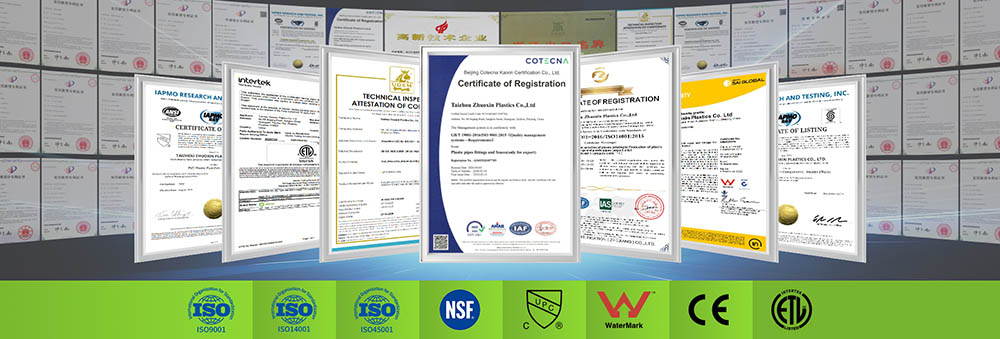
1.Current certifications with expiry dates — not the framed wall copies, the actual certificates with valid date ranges. Cross-check every one against the certifying body’s online database before you board the plane. NSF, UPC, and Watermark listings are all publicly searchable.
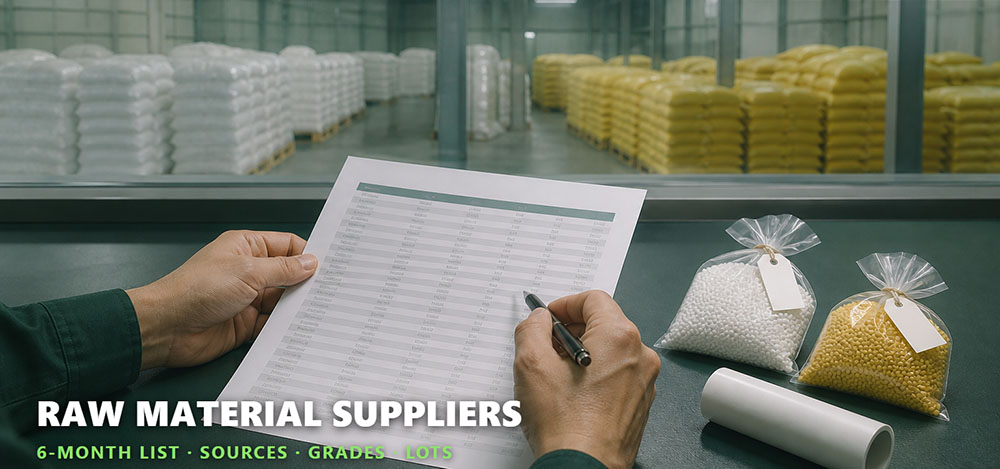
2. Raw material supplier list for the last 6 months — you want to see resin sources, grades, and lot numbers. If they’re vague about suppliers, they’re probably buying spot-market resin. That means material properties can shift from batch to batch.
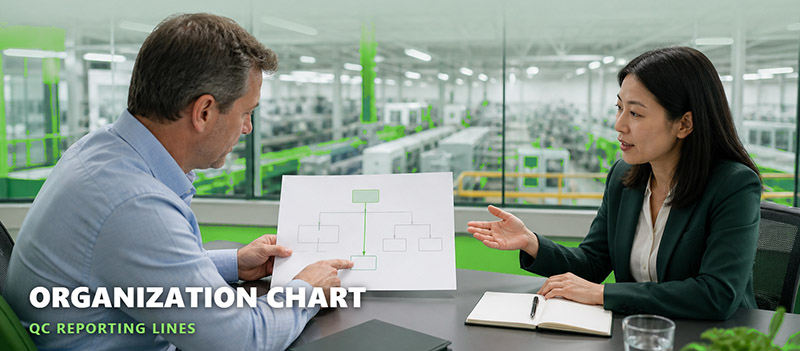
3. Organizational chart with QC reporting lines — where does the QC manager sit? If QC reports to production rather than directly to the general manager, quality is subordinate to output targets. That’s a structural conflict of interest.
4. Last 2 external audit reports — from certification bodies or third-party customers. A factory that refuses to share these has something to hide. Simple as that.

Pro tip: A factory holding 5+ active certifications (NSF, UPC, ETL, CE, Watermark) simultaneously is a strong signal. Maintaining that many certifications requires continuous investment in lab equipment, calibration, and audit-readiness. It’s expensive and annoying — which is exactly why few factories bother. The ones that do are serious.
The Factory Walkthrough — 7 Things to Inspect
1. Raw Material Storage & Traceability
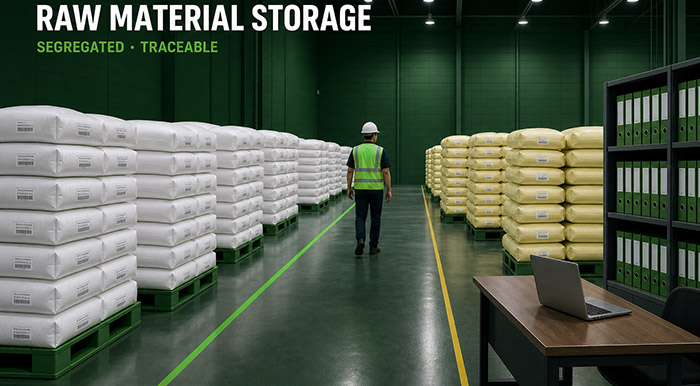
Walk into the raw material warehouse first — before the production floor. Look for labeled, sealed, and segregated storage. PVC resin sitting next to CPVC resin without clear separation is a contamination risk that’ll show up as brittle fittings six months after installation. Check for lot-number traceability from resin bags to production records. If a batch traceability audit takes more than 15 minutes to complete, their system is broken. I’ve watched a factory in Zhejiang trace a fitting back to the exact resin shipment in under 3 minutes. That’s the benchmark.
2. Mold Workshop — In-House vs. Outsourced
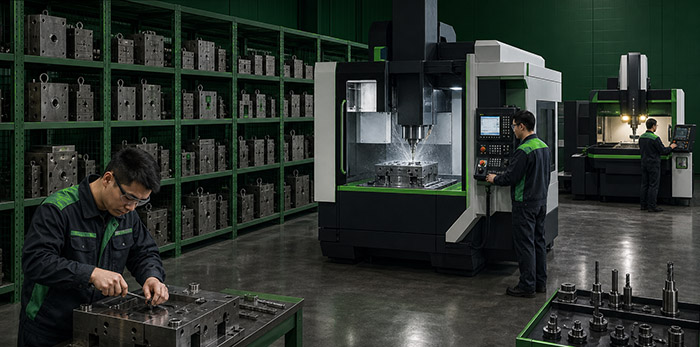
Here’s something most procurement guides won’t tell you: the mold workshop is the single biggest differentiator between a real manufacturer and a trading company with factory access. In-house mold making means the factory controls tooling design, modification speed, and maintenance schedules. Outsourced mold work means every design change takes weeks and every repair costs you money.
When you walk the mold shop, look for CNC machining centers, EDM machines, and a tooling library with labeled, organized molds. Ask to see maintenance logs for the molds currently in production. A factory with 30 years of mold-making experience will have records going back decades — and the difference shows in fitting consistency. No in-house mold shop? That’s not a dealbreaker for simple products. For complex fittings and valves? It should be.
3. Extrusion Lines — Age, Maintenance, Capacity
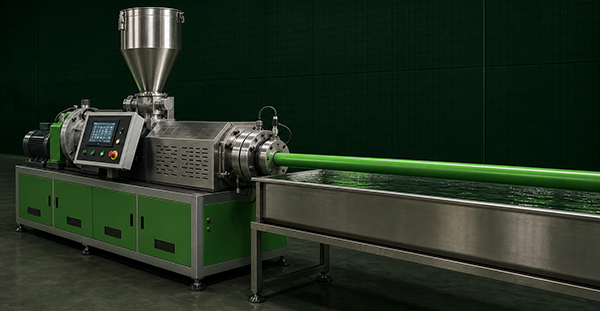
Count the lines. Then ask how many are running. If fewer than 70% are operational, you’re looking at a factory that either can’t maintain its equipment or can’t sell enough to run it. Neither is good. Check the manufacturer plates on the extruders — Chinese machines from the 1990s are common, but they should have modern control panels retrofitted. Temperature controllers should be PID-type, not simple on/off switches. The difference in wall thickness consistency between the two is night and day.
Also ask: what’s the annual output capacity vs. actual output? A factory running at 50,000 tonnes capacity with 60-70% utilization has room to absorb your orders without scrambling. A factory at 95% utilization? Your order goes to the back of the line when their bigger customers call.
4. Injection Molding — Tool Changeovers & Cycle Monitoring
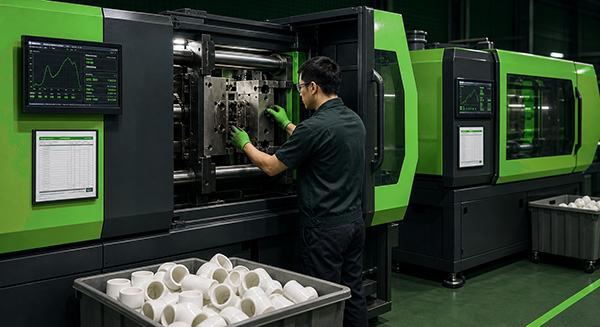
For fittings and valves, injection molding is where quality is made or broken. Watch a tool changeover if you can — it reveals how disciplined the shop floor really is. Are mold surfaces cleaned between runs? Are cycle time, injection pressure, and hold pressure parameters documented per mold? A factory that runs the same settings for every mold is guessing. A factory with mold-specific parameter sheets posted at each machine is engineering.
Check for real-time process monitoring screens. Modern injection molding lines should track and alarm on deviations in fill time, cushion position, and peak pressure. Without this, a bad batch runs until someone notices — which might be never, until your shipment arrives.
5. QC Lab — Equipment, Calibration, Testing Frequency
This is the most important stop on the entire tour. Do not let anyone rush you through it.
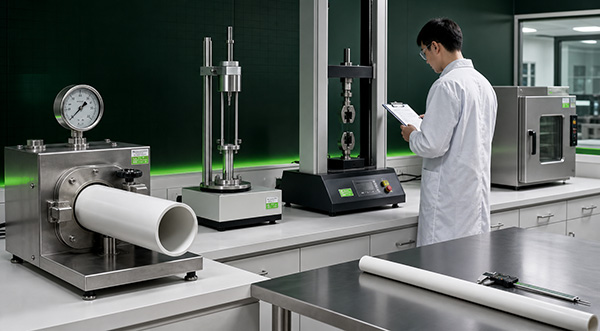
A serious pipe QC lab should have, at minimum: hydrostatic pressure testers (short-term and long-term), impact testers, Vicat softening point apparatus, tensile testing machines, dimensional inspection tools calibrated to 0.01mm, and an oven for heat reversion testing. Stickers on each piece of equipment should show the last calibration date. If the hydrostatic tester’s calibration sticker is more than 12 months old, the test results are unreliable — end of discussion.
Ask the lab technician — not the sales manager — to walk you through yesterday’s test results. A good lab runs tests daily and records everything. A bad one “tests as needed” which means “tests when a customer complains.” Look at the failure log. Every factory has failures. What matters is whether they document, investigate, and correct them, or just sweep them under the rug.
6. Finished Goods Warehouse
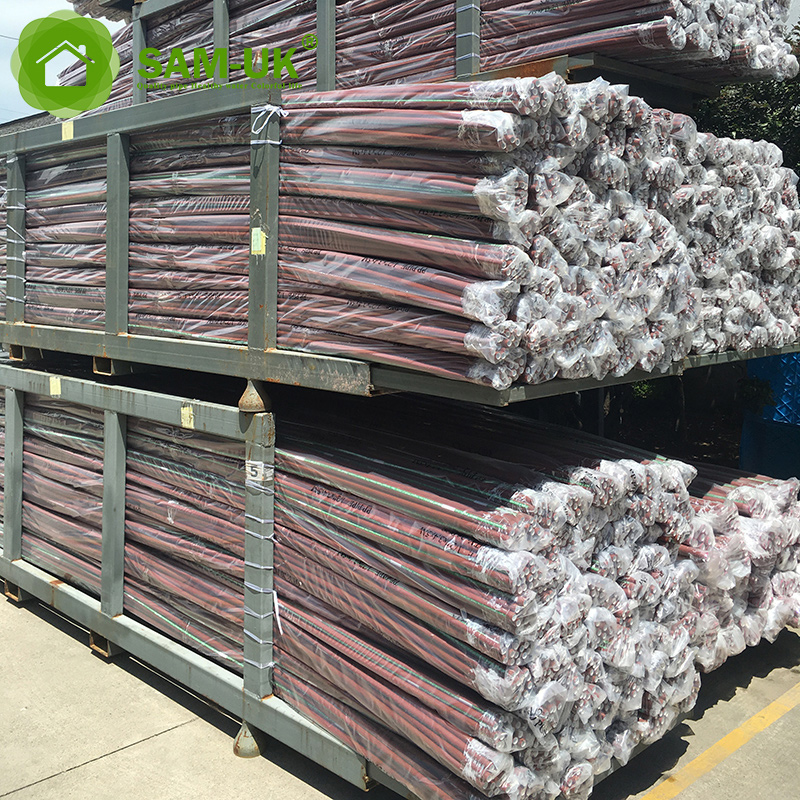
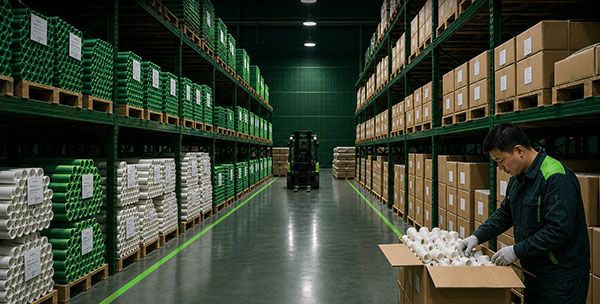
Walk the warehouse without notice. What you’re looking for: organized racking, clear labels with production dates and lot numbers, FIFO (first-in-first-out) flow, and clean packaging. Pipes stacked directly on a dirty floor absorb contaminants. Fittings dumped loose into bins get scratched — scratches that become stress concentration points under pressure.
Check random cartons. Open them. Look at the fittings inside. If the packaging quality varies from carton to carton, their final inspection process is inconsistent. Also note: are there multiple brands being packed in the same warehouse? If so, are they segregated? Cross-packing the wrong brand label onto your shipment is a logistics nightmare that happens more often than buyers realize.
7. Worker Conditions — An Overlooked Quality Indicator
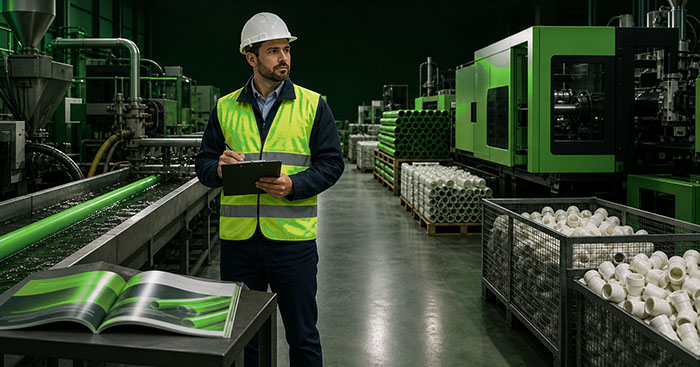
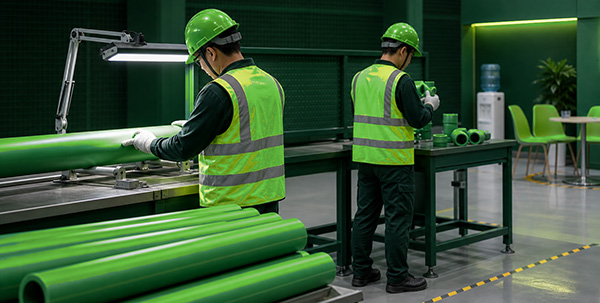
Quality control doesn’t happen in a vacuum. Workers who are exhausted, undertrained, or working in unsafe conditions don’t produce consistent quality. Check: are workers wearing proper PPE? Is the lighting adequate for visual inspection? Are break areas clean? A factory floor where people look miserable is a factory where someone is cutting corners just to meet quota. I’ve seen it. You can feel the difference between a floor where people take pride in their work and one where they’re counting the minutes.
The Paperwork Audit — 4 Documents to Demand
After the walkthrough, sit down and demand these four documents. Not “when you get a chance.” Now.
| Document | What You’re Really Checking | Good Sign | Bad Sign |
|---|---|---|---|
| Material Certificates (COA) | Resin grade, lot traceability, compliance with your spec | Certificate matches physical lot number on resin bags | “We’ll get those from the supplier” — means no traceability |
| In-Process QC Records | How often they inspect, what they measure, what they do with failures | Hourly checks recorded on dated, signed forms | Blank forms, pre-filled forms, forms with no failure entries ever |
| First Article Inspection (FAI) Reports | Mold validation discipline for new tooling | Complete dimensional report with CPK data on critical dimensions | “We don’t really do formal FAIs” — run |
| Corrective Action Reports (CAR) | Whether problems get fixed or just noted | CARs with root cause analysis, corrective action, and verification | No CAR system at all, or CARs that close without verification |
Red Flags That Should Kill a Deal
Some issues are fixable. These five are not. If you see any of them, walk away.
How a 20-Year Factory Compares
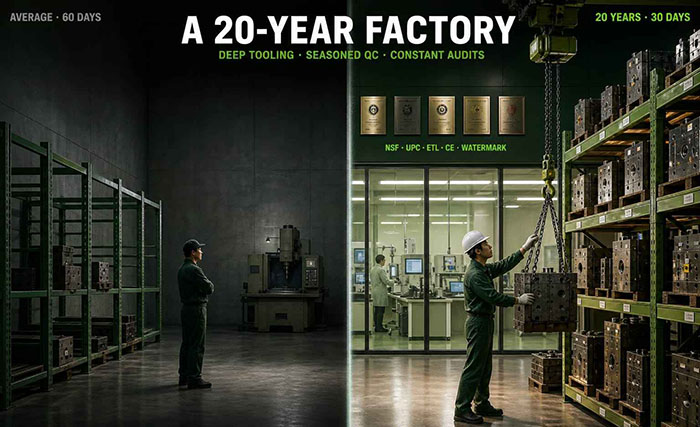
When you audit a factory that has been operating continuously for twenty years, certain things stand out immediately. The tooling library is deep — molds for fittings and valves that most factories would need 8-12 weeks to build from scratch are already on the shelf, maintained and ready. The QC lab doesn’t just have the equipment; the technicians know what failure modes look like because they’ve seen them all. A through-wall crack, a socket-fusion cold joint, an uneven wall thickness from worn extruder screws — they’ve handled each one thousands of times.
You’ll also notice the certification wall isn’t just for show. Maintaining NSF, UPC, ETL, CE, and Watermark simultaneously means the factory undergoes at least 4-6 unannounced surveillance audits per year from different bodies. That constant external scrutiny forces discipline. There’s no coasting on a 5-year-old certificate — every audit could be the one that pulls your listing.
And the in-house mold workshop? That’s not a luxury. It’s how a factory with 300+ workers and 50,000 tonnes of annual capacity delivers new tooling in 30 days when the industry average is closer to 60. The difference between 30 days and 60 days is an entire production cycle for most B2B buyers. That’s real money.
Frequently Asked Questions
How long should a plastic pipe factory audit take?
A thorough audit takes one full business day minimum — roughly 8 hours. Half-day audits miss either the document review or the detailed walkthrough. For a first-time supplier with complex products (fittings AND pipes AND valves), plan for 1.5 to 2 days. Rushed audits produce false confidence. The travel cost is sunk anyway — spend the extra day.
Can I do a remote/virtual factory audit instead?
Remote audits are better than nothing, but nowhere near as effective as being on site. You can verify documentation and see video of equipment, but you can’t spontaneously walk into the scrap area or open random cartons in the warehouse. Use remote audits for pre-qualification screening — never as a substitute for the on-site visit before a large first order.
What’s the most common QC failure in PVC pipe manufacturing?
Wall thickness inconsistency — either within a single pipe or across a production batch. It’s usually caused by poor temperature control on the extruder, worn screws, or inadequate cooling tank calibration. The scary part? A pipe with uneven wall thickness can pass a quick dimensional check at the ends but fail under sustained pressure months into service. That’s why on-site audits must verify that QC checks happen mid-pipe, not just at the ends.
Should I hire a third-party audit firm or do it myself?
For first-time buyers without manufacturing experience: hire a third party. Companies like SGS, Bureau Veritas, and TÜV have local auditors who speak the language and know the common shortcuts. Expect to pay $800–$2,000 per audit day depending on location. If you have an experienced quality engineer on your team, self-auditing is fine — but bring someone who has worked on a production floor, not just a procurement person.
How often should I re-audit an existing supplier?
Annually at minimum, and more frequently if you’re ordering high volumes or mission-critical products. Certification bodies require surveillance audits, but those aren’t as detailed as a customer audit. A factory that was excellent two years ago can deteriorate when key QC staff leave or when ownership changes. I’ve seen it happen. Don’t assume continuity.
What certifications should a serious plastic pipe factory hold?
For North American markets: NSF/ANSI 14 (performance), NSF/ANSI 61 (health effects), and UPC (IAPMO code compliance) are the baseline. ETL/Intertek provides additional coverage. For Australian markets: Watermark certification (AS/NZS 4020 and AS/NZS 1260) is non-negotiable. For European markets: CE marking. A factory with 5+ active, verifiable certifications across multiple standards bodies is almost certainly operating at a high level — the surveillance audit burden alone requires it.
About SAM-UK
SAM-UK are a professional 20+ years manufacturer in producing vinyl building profile products and PVC , CPVC , PPH , PPR , PP pipes and pipe fittings, valves, taps and so on. See our certification records and product-specific scope. We support color /size customization. Welcome to consult for Catalog and Product. you can contact us at email [email protected]